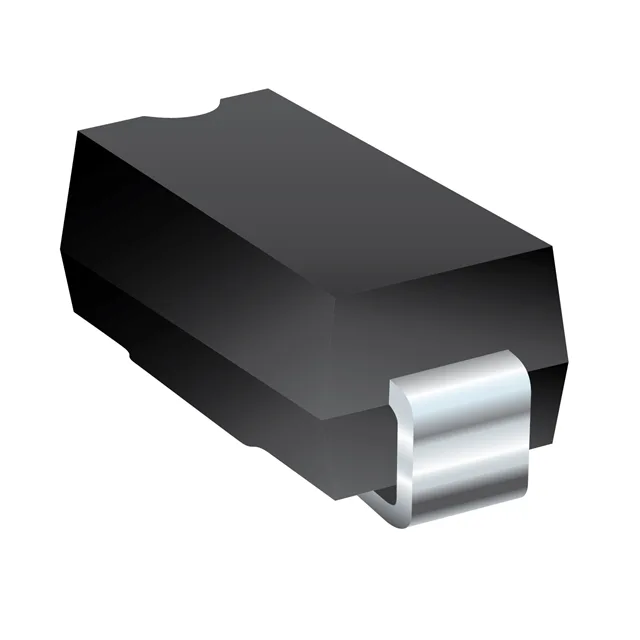
What the 1500W rating means on your board
The 1.5SMBJ33CA: That 1.5kW figure is the energy it can clamp in a single surge event — enough to absorb an inductive kick from a relay coil or a 28.2A peak pulse current without the die fracturing. The 33V reverse standoff means it sits across a 24V or 28V DC rail and stays off until a transient pushes past 36.7V breakdown, then clamps at 53.3V max. This part is not rated for power-line protection — the 1500W pulse rating assumes a signal or DC bus application, not repeated AC mains surges. The DO-214AA (SMB) package is a standard surface-mount footprint; the same pad layout serves many TVS diodes in this power class, so a last-minute BOM swap to a different SMB-packaged part usually keeps the board spin the same.
Temperature range and deployment context
The 150°C upper limit is the die temperature during a pulse — the ambient at the package body will be lower, but the margin means this part survives a hot engine bay with the alternator load-dump transient hitting the rail. The single bidirectional channel protects a signal pair or a single DC line against positive and negative transients with one component — useful on CAN bus, RS-485, or 24V sensor inputs where the polarity can reverse during a fault.
Sourcing and lifecycle posture
The 1.5SMBJ series is a mature, high-volume line, so supply through authorized and independent channels is stable.