What this TVS clamps and where it fits
The 1.5SMBJ26A-H: It protects a single 24 V nominal rail — the 26 V reverse standoff means it stays off the bus during normal operation, then clamps at 42.1 V when the surge current hits 35.7 A.
Clamping window and the 24 V rail decision
The 26 V standoff voltage sits comfortably above a nominal 24 V bus — even with a 10 % tolerance (26.4 V) the TVS stays in standby. Breakdown starts at 28.9 V minimum, and the clamping voltage at peak pulse current is 42.1 V. That 42.1 V ceiling must stay below the downstream IC's abs-max rating; a 40 V-rated regulator or 60 V-rated MOSFET has margin, but a 36 V-rated part does not. Power line protection is marked 'No' — this is a transient suppressor, not a continuous overvoltage clamp. If the rail sits above 26 V for more than a few milliseconds, the TVS enters breakdown and the junction temperature climbs until the part fails. The 1500 W rating assumes a single 10/1000 µs pulse at 25°C; derate for ambient temperature and repetitive surges per the datasheet curve.
Package and board integration
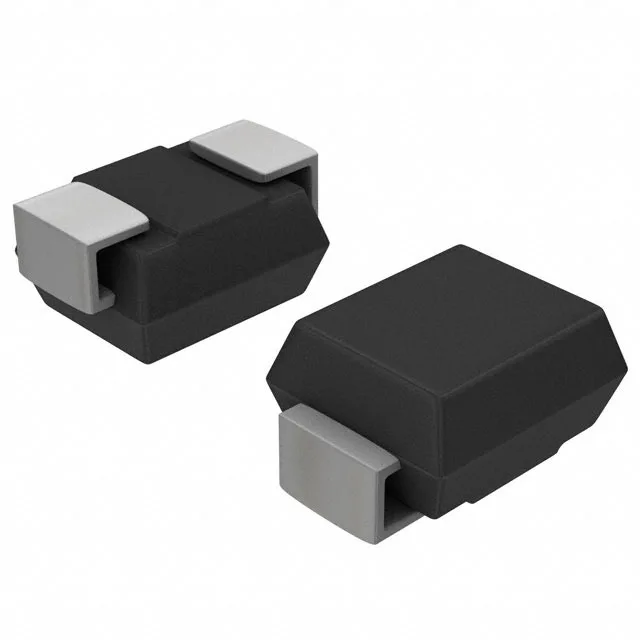
DO-214AA (SMB) surface-mount package — the same footprint as the rest of the 1.5SMBJ family. Two-pad layout with the cathode marked by a band. The copper pad area under the package sets the thermal resistance; for a 1500 W pulse the junction-to-board path needs a solid pour on the cathode side to spread the heat. Standard reflow profile for a JEDEC MSL-1 device.