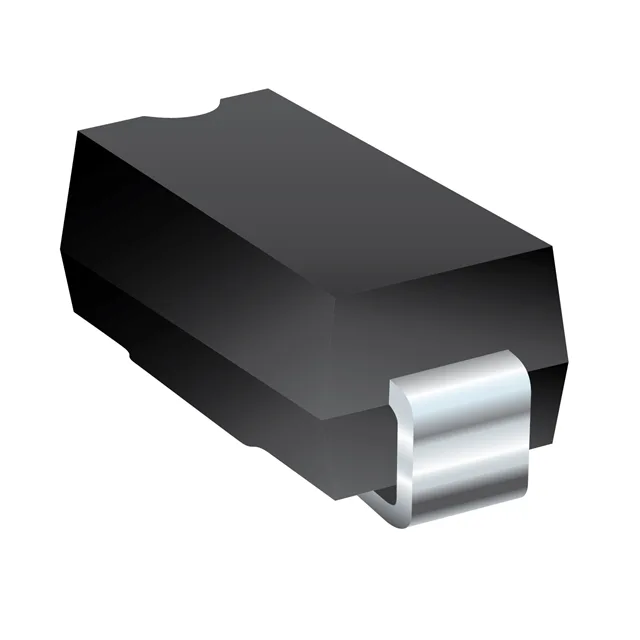
1500 W surge clamp for a 24 V rail
The 1.5SMBJ24CA: With a 24 V reverse standoff voltage, it sits across a 24 V DC bus or a 24 VAC line and stays transparent until a transient pushes the rail above 26.7 V (minimum breakdown) — then it clamps at 38.9 V maximum, shunting up to 38.6 A of surge current away from the downstream circuitry.
What the clamping numbers mean for your rail
When a surge hits, the breakdown region (26.7 V min,) triggers conduction, and the clamping voltage of 38.9 V is the peak voltage the protected load sees. For a 24 V-rated input stage with a 40 V abs-max rating, the 38.9 V clamp leaves a slim but workable margin — check the downstream IC's absolute maximum against this figure. The 38.6 A peak pulse current is the maximum surge the device can absorb at the 10/1000 µs test waveform without failing. For a real-world transient shorter than 1000 µs (like an ESD or lightning-induced spike), the device can handle significantly more current — the datasheet's peak-pulse-power derating curve tells you how much. The 1500 W rating is the energy ceiling; stay under it and the TVS survives thousands of events.
Temperature range and board fit
The DO-214AA (SMB) package is a standard surface-mount footprint with a large copper pad on the cathode end — the board's copper area under the package directly sets the thermal resistance for pulse power dissipation.