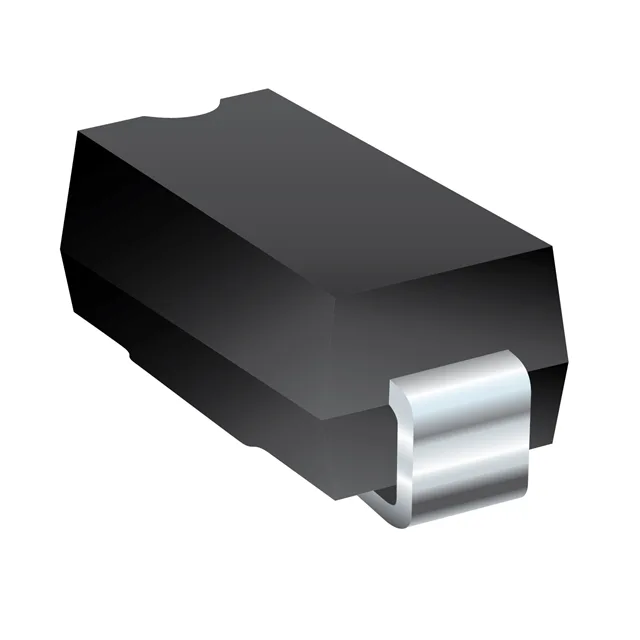
Surge protection for 12V and 24V automotive buses
The 1.5SMBJ13CA-H: Its 13V reverse standoff voltage sits just above the nominal 12V battery rail, so it stays transparent during normal operation and only begins conducting when a transient pushes the line above 14.4V typical breakdown.
Package and board-level fit for DO-214AA
Housed in the DO-214AA (SMB) surface-mount package, the 1.5SMBJ13CA-H mates with a standard SMB footprint — the same pad layout used by many 600W and 1500W TVS diodes in this form factor, so a board already laid out for an SMB TVS accepts this part without a spin. The -55°C to 150°C junction temperature range covers the full automotive under-hood ambient, including the hot-soak condition after engine shutdown where under-bonnet temperatures peak. The junction rating is the absolute ceiling — the board's copper pour and via count under the cathode tab determine the actual derating above 25°C.
Bidirectional — one part protects both polarities
A single bidirectional channel means the 1.5SMBJ13CA-H clamps positive and negative transients symmetrically — useful on AC-coupled signal lines or on DC buses where reverse-voltage events (reverse battery, alternator field decay) are as likely as overvoltage.