What the 7ns propagation delay means on the bench
The MAX999EUK+T is a single-channel general-purpose comparator from Maxim's Beyond-the-Rails™ series, packing a 7ns max propagation delay that sets the upper bound on how fast it can toggle between logic states. That 7ns figure is the total through the comparator — input to output — so the actual system-level toggle rate will be lower once you add the load capacitance and trace delay on the SOT-23-5 footprint. The 3.5mV internal hysteresis cleans up chatter on slow-moving inputs — useful when the signal comes off a sensor or a long trace that picks up noise.
Supply range, output drive, and the industrial temp grade
The output swings CMOS or TTL levels, so it drives the logic input of an MCU, FPGA, or PLD directly without a level shifter. Quiescent current maxes at 7mA — not a micropower part, but the speed comes at that draw. Input bias current is 15µA max at 5V, and the input offset voltage is 1.5mV max at 5V, both figures you'll want to check against the threshold accuracy your application needs. CMRR and PSRR are both around 80 dB typical — the common-mode and supply rejection are strong enough that a few hundred millivolts of ripple on the rail won't shift the trip point noticeably.
Package, footprint, and production status
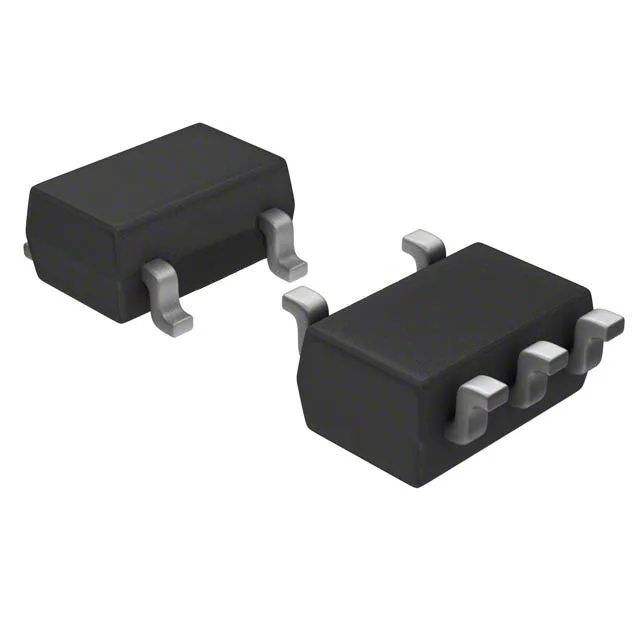
The MAX999EUK+T comes in a SOT-23-5 package (SC-74A, SOT-753), a five-pin surface-mount footprint that fits the standard 0.95 mm pitch layout. The supplier device package is listed as SOT-23-5, which is the same physical part — no hidden paddle or thermal pad to worry about on a two-layer board.