What this comparator is and where it fits
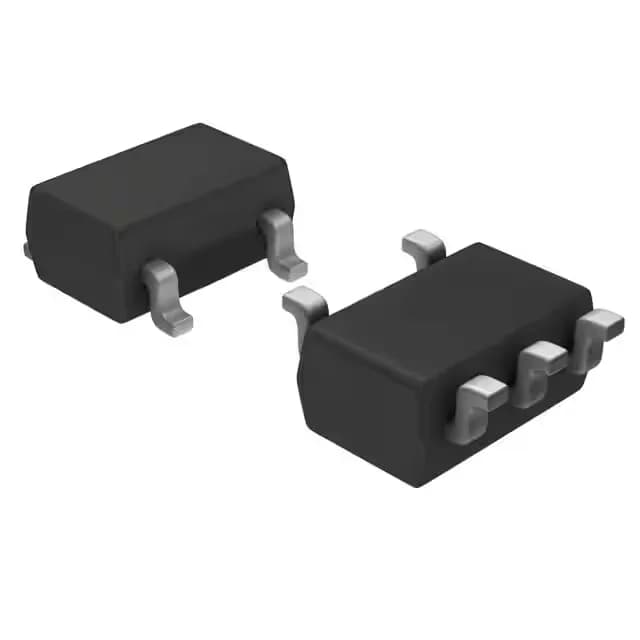
The Maxim Integrated MAX987EUK+T is a single general-purpose comparator in a SOT-23-5 package. It combines rail-to-rail input and output with CMOS, push-pull, and TTL-compatible drive — meaning it interfaces directly with 2.5 V to 5.5 V logic without extra level shifting. The 210 ns propagation delay keeps it responsive for signal-conditioning loops in portable instruments, battery monitors, and threshold detectors. Quiescent current maxes at 96 µA, so it won't drain a coin cell overnight.
210 ns delay and 96 µA quiescent — the trade-off
At 210 ns max propagation delay, this part is fast enough for most low-frequency threshold and zero-crossing circuits but not for high-speed comparator applications like clock recovery or fast ADC front-ends. The 96 µA quiescent current is the trade-off: you get microamp-level power consumption at the cost of response time. For a battery-powered over-voltage latch or a window comparator in a handheld meter, that exchange works.
Rail-to-rail I/O and input specs
The rail-to-rail input range lets you sense signals near the supply rails — useful when the reference is close to ground or the positive rail. Input bias current is 1 pA at 5.5 V, so high-impedance sources like photodiode outputs won't be loaded down. Input offset voltage maxes at 5 mV at 5.5 V, which is typical for a general-purpose comparator; if you need sub-millivolt precision, look at a precision comparator family. Hysteresis of ±2.5 mV is built in, reducing chatter on slow-moving signals without external feedback resistors.
Temperature grade and environment
Rated for -40°C to 85°C, this part handles industrial environments — outdoor telecom cabinets, factory-floor sensor interfaces, and engine-bay electronics that see under-hood heat. The SOT-23-5 footprint is small enough for dense PCBs but still hand-solderable for prototyping.
Lifecycle and sourcing
Listed as Active with ROHS3 compliance. For BOM planning, it's a safe line item — no LTB risk in the near term.