What this stereo audio codec is and where it fits
The MAX9867EWV+T from Maxim Integrated is a low-power stereo audio codec built around a sigma-delta modulator architecture. It integrates two ADCs and two DACs at 18-bit resolution, handling stereo line-level audio I/O through a serial I2C control interface. The part targets portable and battery-powered audio applications — smartphones, tablets, portable media players, and wireless headsets — where its 1.65V to 1.95V analog and digital supply rails allow direct connection to low-voltage baseband or application processors without an extra regulator.
18-bit resolution and dynamic range — what the numbers mean for your audio chain
The 18-bit word length is a step above the common 16-bit consumer audio tier, giving an extra 12 dB of theoretical SNR headroom. The typical dynamic range is 85 dB on the ADC side and 90 dB on the DAC side, which is enough for line-level playback and recording in a portable device but not for high-end studio monitors (those would look for >105 dB). The sigma-delta architecture pushes out-of-band noise to higher frequencies where a simple post-filter cleans it up, so the analog output stage doesn't need a steep elliptical filter. If your system already has a 16-bit codec and you are chasing better voice-call or music SNR, this part gives a clean upgrade path without changing the I2C command set.
Package and mounting: 30-WLP — plan the reflow profile
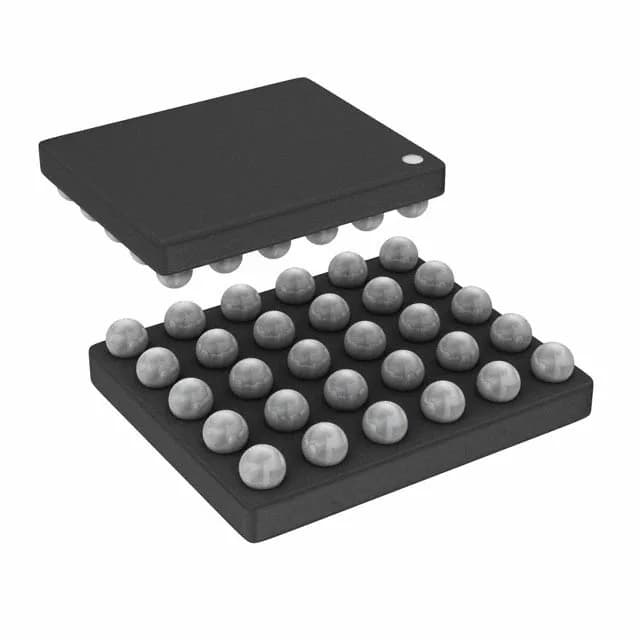
The MAX9867EWV+T ships in a 30-bump wafer-level package (WLP, also referred to as 30-WFBGA / WLBGA). This is a fine-pitch BGA with no peripheral leads — all connections are under the die. Reflow requires a controlled-profile oven and X-ray inspection for voiding and solder-joint integrity. Moisture sensitivity is MSL 1 per the JEDEC standard for WLP packages, so bake-out before reflow is not needed if the sealed bag is intact. If your assembly line isn't set up for WLP, the footprint is the same as the 30-WLP land pattern — no escape routing via micro-vias is required if the PCB has at least four layers.
Sourcing and supply position
ROHS3 compliant, so it clears the EU RoHS exemption list without a lead-free waiver. No official second source or pin-compatible alternate is listed in the component record, but the I2C register map is standard across the Maxim audio codec family — a firmware port to a sibling part is straightforward if supply tightens.