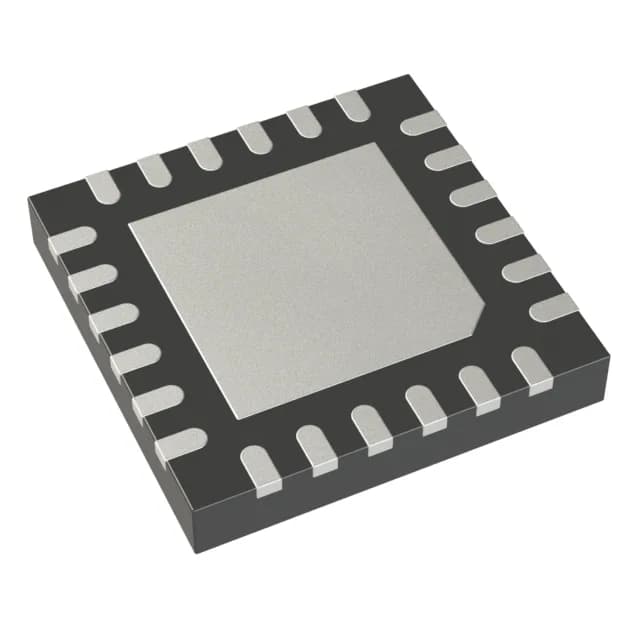
Class D mono amplifier for single-speaker audio systems
The Maxim Integrated MAX9737ETG+ is a Class D mono audio amplifier delivering 13W into a 4Ω load from a single supply rail spanning 8V to 28V. Its switching topology keeps efficiency high, meaning a smaller heatsink and lower board temperature than a linear amp at the same output power. The device integrates depop circuitry to suppress turn-on clicks, mute control, and full short-circuit and thermal protection, so the BOM stays lean. It is housed in a 24-TQFN (4x4 mm) package with an exposed pad for thermal management. With an industrial temperature range of -40°C to 85°C, this part is rated for environments where the ambient can swing — think outdoor public-address systems, automotive cabin audio, or factory-floor annunciators. The mono output makes it a natural fit for subwoofer channels, single-speaker portable PA units, or bridge-tied-load configurations where a second channel is not needed.
13W into 4Ω — what it means for the system
The headline output rating of 13W x 1 @ 4Ω sets the acoustic SPL you can expect from a typical 4Ω speaker. This is not a high-power subwoofer driver; it fits medium-sized desktop speakers, soundbars, or ceiling-mount paging horns. The 8V to 28V supply range lets you scale the rail voltage to match the output power target — a 12V supply will deliver less than the full 13W, while a 24V rail gets you closer to the maximum. Plan the power supply headroom accordingly.
Active lifecycle, no obsolescence risk for new designs
There is no last-time-buy notice or end-of-life watch. This makes it a safe choice for a new BOM line or a sustaining design that will run for several years. The part is ROHS3 compliant, meeting the latest EU directive requirements.
Package and thermal design notes
The 24-TQFN (4x4 mm) package with an exposed pad requires a thermal via array under the pad to sink heat into the PCB ground plane. Without adequate thermal management, the device will current-limit or thermally shut down well before reaching the 13W output. The datasheet layout recommendation calls for multiple vias connecting the exposed pad to an inner-layer copper pour. Surface-mount assembly is straightforward with standard reflow profiles for QFN packages.