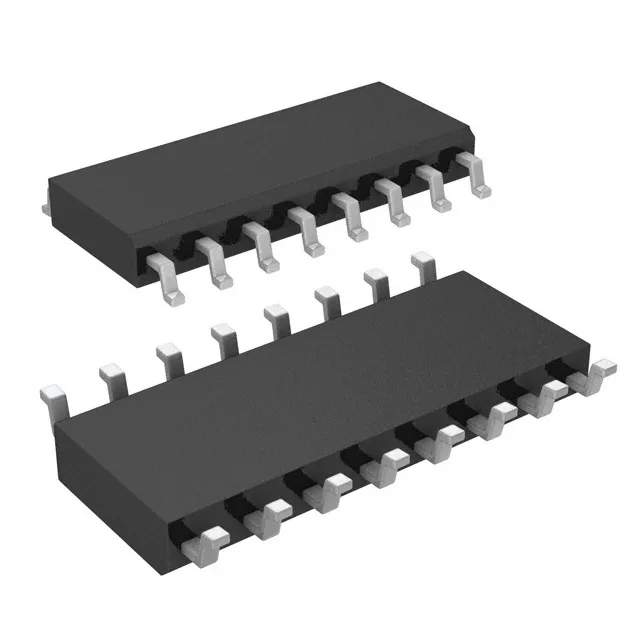
Analog Devices MAX969ESE+ — Discrete Semiconductors

MAX969ESE+ Analog Devices Quad Comparator, Voltage Reference

MPNMAX969ESE+
End of Life

Analog Devices MAX969ESE+ quad comparator with integrated voltage reference, 4 elements, open-drain rail-to-rail outputs, ±1mV hysteresis, 16-SOIC package, tube.

$7.26Ref. price · indicative, final on quote
Packaging16-SOIC (0.154", 3.90mm Width)
StockContact for availability
Lead timeIn Stock wk
MOQ1 pcs
  • 100% new & originalTraceable channels only — no refurbs, no pulls, no remarked parts.
  • Date & lot codes on quoteStated per line before you commit; label photos on request.
  • MSL-compliant ESD packingMoisture-sealed bags with indicator cards; reels photo-verified.
  • PayPal buyer protectionPay by T/T, PayPal or Payoneer — card payments covered end to end.

Specifications

MAX969ESE+ Technical Specifications
ParameterValue
Typewith Voltage Reference
Output typeOpen-Drain, Rail-to-Rail
Mounting typeSurface Mount
Voltage - input offset7mV @ 5.5V
Voltage - supply, single (Dual (±))1.6V ~ 5.5V
Current - quiescent22µA
Current - input bias0.05µA @ 5.5V
Operating temperature-40°C ~ 85°C
PackageTube
Hysteresis±1mV
Case16-SOIC (0.154\", 3.90mm Width)
CMRR, PSRR56.48dB CMRR, 80dB PSRR
Number of elements4
Propagation delay20µs

Product details

Threshold accuracy and noise rejection

The MAX969ESE+: With 56.48 dB CMRR and 80 dB PSRR, the comparator maintains threshold accuracy in the presence of common-mode noise and power-supply ripple, which is critical for reliable operation in electrically noisy environments like motor-drive cabinets or factory-floor sensor interfaces. The ±1 mV hysteresis prevents output oscillation when the input signal crosses the threshold slowly, a common failure mode in battery-voltage monitoring or temperature-sensor comparators that can cause false triggering in downstream logic.

Output flexibility and power budget

Maximum quiescent current is 22 µA per device, so all four comparators draw under 90 µA total, fitting into low-power sensor nodes or battery-backed monitoring circuits where every microamp matters. The 20 µs maximum propagation delay sets the response time ceiling — adequate for overvoltage/undervoltage detection and threshold monitoring at sub-50 kHz rates, but not for high-speed zero-crossing or pulse-width modulation applications.