1.8 ns delay — signal-path timing margin
The MAX9693ESE+: Maximum propagation delay of 1.8 ns sets the comparator's response ceiling. In a high-speed threshold detector or zero-crossing circuit, this delay plus the ECL output rise time into the load capacitance determines the minimum pulse width the comparator can resolve. The complementary ECL outputs drive terminated 50-ohm lines directly, preserving edge rates into a backplane or coaxial interconnect.
80 dB CMRR — noise rejection in the analog front end
Typical common-mode rejection of 80 dB and PSRR of 60 dB mean the comparator rejects supply ripple and common-mode noise that would otherwise cause false triggering. In a noisy industrial environment — motor-drive feedback or isolated sensor interface — these figures keep the threshold stable. Input offset voltage maxes at 6.5 mV at 5 V; input bias current is 20 µA max, so the voltage drop across source impedance must be budgeted into the threshold error.
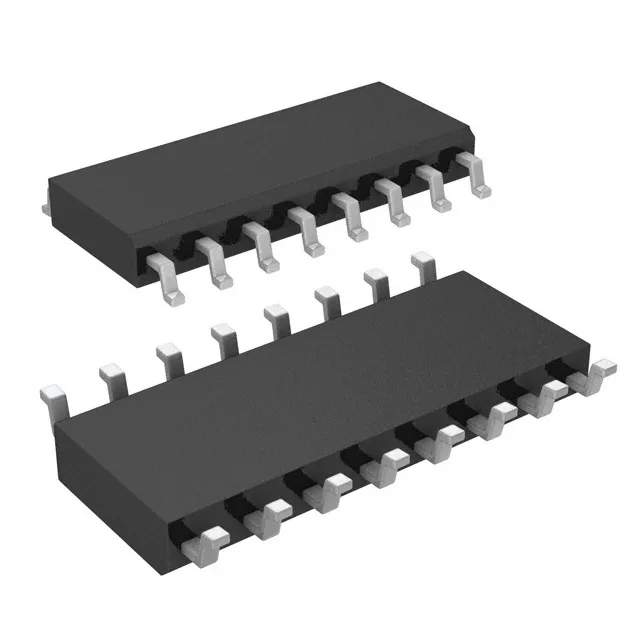
16-SOIC — package and board integration
Supplied in a 16-pin SOIC with 0.154-inch body width and surface-mount footprint. The supplier device package is 16-SOIC — the same mechanical outline as the industry-standard SO-16. The quiescent current maxes at 46 mA for both comparators; the 50 mA typical output current per channel drives ECL-terminated lines without external buffers.