What this part is — nanoPower current sense amp
The Maxim Integrated MAX9634FERS+T is a single-channel current-sense amplifier from the nanoPower series, built for continuous monitoring of load current on a high-side shunt. It draws 1.1 µA of supply current, which makes it viable for always-on sensing in battery-powered equipment — think handheld meters, portable medical devices, or IoT edge nodes where every microamp extends field life. The 125 kHz gain-bandwidth product gives enough speed to catch load transients in a DC/DC converter loop or to feed a microcontroller ADC for overcurrent detection, without the power penalty of a general-purpose op-amp. Packaged in a 4-UCSP (1x1 mm) wafer-level chip-scale package, it saves board area but demands a reflow profile tuned for fine-pitch BGA-style parts and careful x-ray inspection post-assembly. The industrial temperature range (-40°C to 85°C) covers outdoor telecom cabinets, automotive cabin modules, and factory-floor sensor interfaces.
Supply current and bandwidth — what they mean for your design
The 1.1 µA quiescent current is the part's headline differentiator. The 125 kHz GBW limits the usable bandwidth for the sense signal.
Package reality — 4-UCSP (1x1 mm)
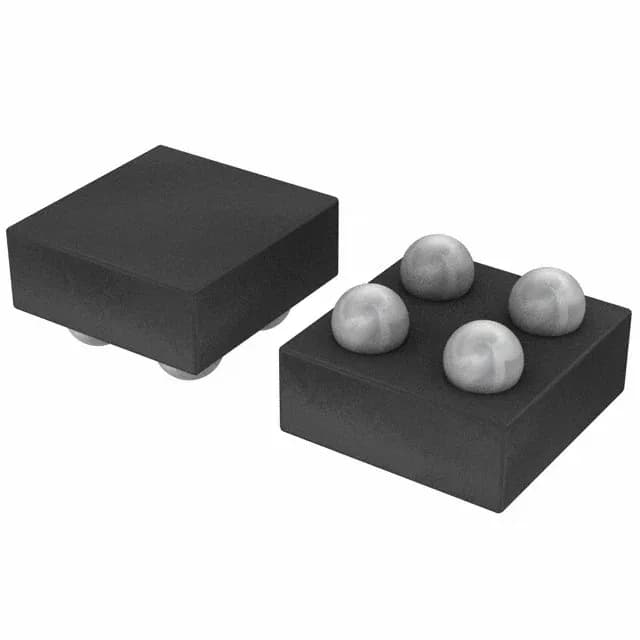
The 4-UCSP (1x1 mm) package is a wafer-level chip-scale BGA with four bumps. It saves about 70% board area versus a SOT23-5, but the trade-off is assembly sensitivity: the package requires a solder mask defined (SMD) footprint, a stencil aperture matched to the bump diameter, and a reflow profile that avoids head-in-pillow defects. For rework, hot air at 260°C peak with a fine nozzle works; the part is small enough that tweezers alignment is tricky — use a vacuum pick. ESD handling per standard JEDEC is assumed; no rating given here, so treat it as Class 1C or better.
Lifecycle and sourcing
The MAX9634FERS+T carries an Active lifecycle status from Maxim Integrated (now part of Analog Devices). If you need dual-source assurance, look at other nanoPower current-sense amplifiers from Maxim/ADI in the same package family, but verify pin compatibility from the datasheet.