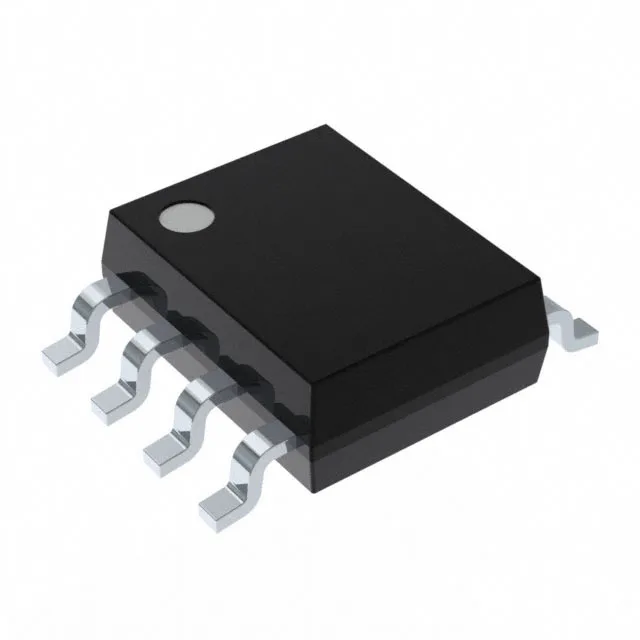
Single-channel LVTTL-to-LVPECL translation in 8-SOIC
The MAX9371ESA+ is a single-channel, unidirectional mixed-signal translator that converts LVTTL or TTL input levels to differential LVPECL or PECL output levels. It sits in the signal chain between a standard logic output and a high-speed clock or data receiver that expects a differential LVPECL swing — common in telecom line cards, test equipment, and FPGA-to-serDes interfaces where the extra noise margin of a differential pair matters. Housed in an 8-SOIC narrow-body package (3.90 mm width), it ships in tube format.
Industrial temperature range and active lifecycle
Analog Devices lists this part as Active in production and ROHS3 compliant.
What the differential output buys you on the board
The LVPECL output pair delivers a typical 800 mV swing into a 50-Ω termination to VCC-2V — the same swing used by most PECL clock distribution networks. Because the output is differential, common-mode noise picked up on the trace pair cancels at the receiver, which relaxes the PCB routing constraints compared to a single-ended signal of the same edge rate. Input side accepts standard LVTTL (3.3 V) or TTL (5 V) levels without external level shifting. The single-channel, unidirectional topology means one direction only — data flows from the logic side to the PECL side. If bidirectional translation is needed, a second device or a different translator family is required.