8.5 µA quiescent — the power budget anchor
The MAX934CSE+T draws 8.5 µA max quiescent current across its four comparators and the on-chip 1.182 V bandgap reference. For a battery-powered threshold detector that must run continuously, this current sits below the self-discharge rate of a CR2032 coin cell — the comparator itself is not the dominant drain in the system. Propagation delay is 12 µs max. That is fast enough to catch a 40 kHz PWM cycle crossing a threshold, but too slow for a 1 MHz switching supply's overcurrent trip — the comparator's response time sets the upper frequency of the signal it can reliably digitize.
Supply flexibility and noise rejection
Single-supply range is 2.5 V to 11 V, or ±1.25 V to ±5.5 V split. A single Li-ion cell at 3.6 V nominal is enough headroom; a 5 V regulated rail or a 9 V battery also works without a secondary regulator. 80 dB typical CMRR and PSRR mean the comparator's threshold stays stable when the supply droops or the common-mode voltage shifts — relevant in a multi-cell battery monitor where the top cell's voltage rides on the stack. Input offset voltage is 10 mV max at 5 V. For a 1.182 V reference, that is about 0.85 % of the threshold — acceptable for a battery undervoltage lockout but marginal for a precision current-sense comparator without calibration.
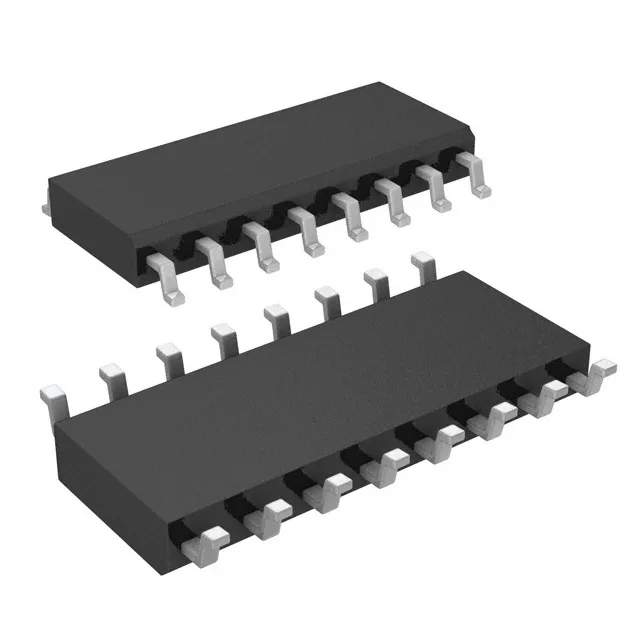
Housed in a 16-SOIC (0.154-inch body width, 3.90 mm), the standard JEDEC footprint. Outputs are CMOS and TTL-compatible, so the comparator drives a logic gate input directly without a pull-up resistor. The typical output current is 0.015 mA at 5 V — enough to sink a CMOS load but not a relay coil or LED indicator without a buffer.
RoHS3 compliant (2011/65/EU + 2015/863), with no exemption flags. Supplied in Tape & Reel (TR) or Cut Tape (CT) options — the reel format suits automated pick-and-place for volume assembly; Cut Tape works for prototype or low-quantity builds.