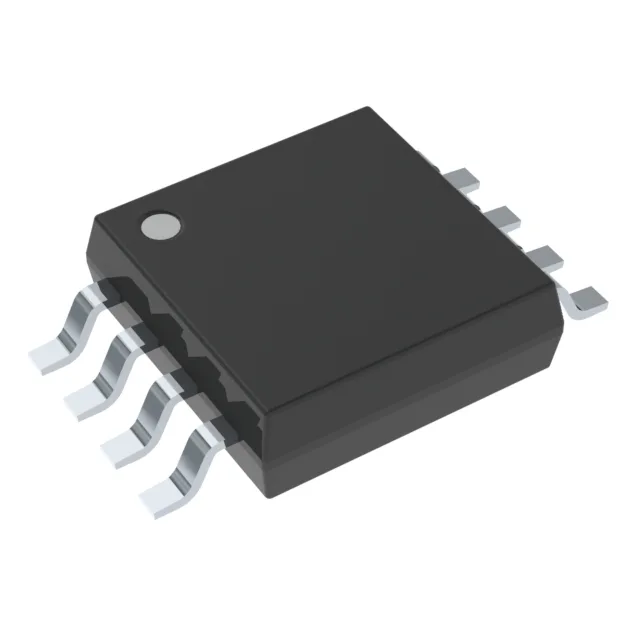
Analog Devices MAX923CUA+ — Analog & Data Acquisition

MAX923CUA+ Analog Devices Dual Comparator with Voltage

MPNMAX923CUA+
End of Life

Analog Devices MAX923CUA+ dual comparator with voltage reference, 50mV hysteresis, 7.5µA quiescent, CMOS/TTL output, 8-uMAX/uSOP surface mount, tube.

$7.98Ref. price · indicative, final on quote
Packaging8-TSSOP, 8-MSOP (0.118", 3.00mm Width)
StockContact for availability
Lead timeIn Stock wk
MOQ1 pcs
  • 100% new & originalTraceable channels only — no refurbs, no pulls, no remarked parts.
  • Date & lot codes on quoteStated per line before you commit; label photos on request.
  • MSL-compliant ESD packingMoisture-sealed bags with indicator cards; reels photo-verified.
  • PayPal buyer protectionPay by T/T, PayPal or Payoneer — card payments covered end to end.

Specifications

MAX923CUA+ Technical Specifications
ParameterValue
Typewith Voltage Reference
Output typeCMOS, TTL
Mounting typeSurface Mount
Voltage - input offset10mV @ 5V
Voltage - supply, single (Dual (±))2.5V ~ 11V, ±1.25V ~ 5.5V
Current - output50mA
Current - quiescent7.5µA
Operating temperature0°C ~ 70°C
PackageTube
Hysteresis50mV
Case8-TSSOP, 8-MSOP (0.118\", 3.00mm Width)
CMRR, PSRR80dB CMRR, 80dB PSRR
Number of elements2
Propagation delay12µs

Product details

Dual comparator with integrated voltage reference — what the 7.5 µA quiescent buys you

The MAX923CUA+ packs two comparators and a voltage reference into an 8-uMAX/uSOP package. The headline number is the 7.5 µA max quiescent current — meaning the whole device draws less than 10 µA total, including the reference, while maintaining 50 mV of built-in hysteresis. That hysteresis eliminates output chatter near the threshold without external resistors, saving board space in battery-powered threshold detectors.

12 µs propagation delay and 80 dB CMRR — signal-chain fit

Propagation delay is 12 µs max, which sets the upper frequency for edge detection — suitable for DC-level sensing and low-speed window comparators, not high-frequency PWM or fast overcurrent trips. The 80 dB typical CMRR and PSRR mean the thresholds stay stable across common-mode shifts and supply ripple, important when the reference is on-chip and shares the same rail. Outputs are CMOS/TTL compatible, so the comparator drives logic inputs directly without a pull-up resistor on the output side. The 50 mA typical output current lets it sink or source small loads like LED indicators or relay coils through a driver transistor.