Dual comparator with latch — what it does and where it fits
The Maxim Integrated MAX9202EUD+ is a dual-channel comparator with a latch function, meaning each comparator's output state can be frozen on a strobe signal and held until the next latch enable. This is the part you reach for when a window comparator needs to capture a fault condition — overcurrent trip, zero-crossing hold, or a level detect that must survive a noisy bus cycle — without the output chattering. The two elements share a common supply and ground, so a single 14-TSSOP package handles two independent threshold decisions. Outputs are TTL-compatible, which simplifies interfacing to 5V logic families or a microcontroller's GPIO without level translation. The supply range spans 4.75V to 10.5V on a single rail, or ±2.375V to ±5.75V on split supplies — useful when the comparator sits between an analog front-end and a digital controller running on different rails. Typical CMRR and PSRR both sit at 86.02 dB, giving the part decent rejection of common-mode noise and supply ripple. Input offset voltage is specified at 4 mV max (at ±5V), and input bias current is 5 µA max — figures that matter when the threshold resistors are in the tens-of-kiloohms range and you want the trip point to stay tight over temperature.
Package, temperature grade, and supply — the design-in constraints
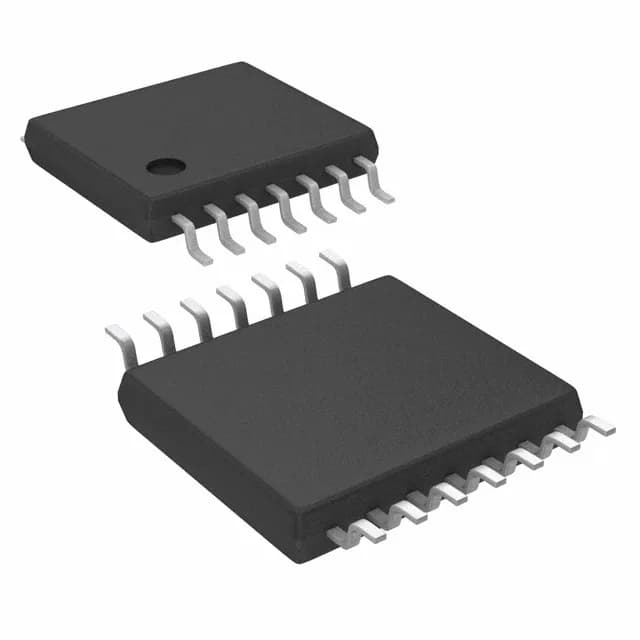
The 14-TSSOP body (4.40 mm wide, 0.173" pitch) is a fine-pitch surface-mount package. The PCB layout engineer should note the narrow lead pitch — a standard 0.65 mm TSSOP footprint works, but the soldermask web between pads is tight. No exposed pad, so thermal dissipation relies on the leadframe and copper pours on the outer layers. Operating temperature is rated -40°C to 85°C, the industrial grade that covers most factory automation, motor-drive control boards (inside the cabinet), and outdoor telecom equipment that isn't under the hood. Quiescent current is listed as 4 mA, 3 mA, 1.5 mA.
Lifecycle and sourcing — active, no obsolescence watch needed
The MAX9202EUD+ carries an Active product status and is ROHS3 compliant. For a BOM line this means zero supply-chain urgency — you can qualify it into a new design without worrying about a forced redesign mid-production.