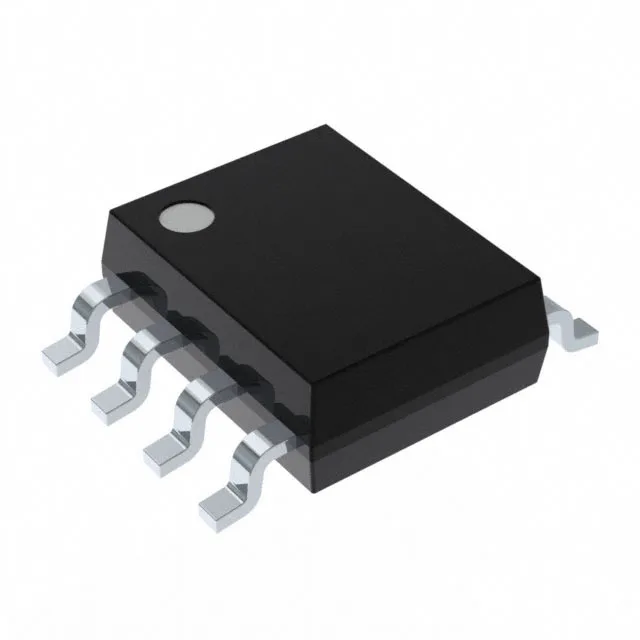
Analog Devices MAX919ESA+ — Analog & Data Acquisition

MAX919ESA+ Comparator, 1.2µA, 8-SOIC, Active

MPNMAX919ESA+
End of Life

Analog Devices Beyond-the-Rails™ series, MAX919ESA+ general-purpose comparator, 1.2 µA quiescent, 4 mV hysteresis, rail-to-rail CMOS output, 8-SOIC package.

$2.56Ref. price · indicative, final on quote
Packaging8-SOIC (0.154", 3.90mm Width)
StockContact for availability
Lead timeIn Stock wk
MOQ1 pcs
  • 100% new & originalTraceable channels only — no refurbs, no pulls, no remarked parts.
  • Date & lot codes on quoteStated per line before you commit; label photos on request.
  • MSL-compliant ESD packingMoisture-sealed bags with indicator cards; reels photo-verified.
  • PayPal buyer protectionPay by T/T, PayPal or Payoneer — card payments covered end to end.

Specifications

MAX919ESA+ Technical Specifications
ParameterValue
TypeGeneral Purpose
SeriesBeyond-the-Rails™
Output typeCMOS, Push-Pull, Rail-to-Rail
Mounting typeSurface Mount
Voltage - input offset5mV @ 5V
Voltage - supply, single (Dual (±))1.8V ~ 5.5V
Current - output50mA
Current - quiescent1.2µA
Current - input bias0.001µA @ 5V
Operating temperature-40°C ~ 85°C
PackageTube
Hysteresis4mV
Case8-SOIC (0.154\", 3.90mm Width)
CMRR, PSRR66.02dB CMRR, 80dB PSRR
Number of elements1
Propagation delay940µs

Product details

Ultra-low-power comparator for battery-edge threshold detection

The Analog Devices MAX919ESA+ is a single general-purpose comparator from the Beyond-the-Rails™ series, drawing just 1.2 µA quiescent maximum — a fit for battery-powered sensor nodes, threshold monitors, and wake-up circuits where every microamp counts. The CMOS push-pull rail-to-rail output drives logic inputs directly — no external pull-up resistor, which saves board space and one BOM line.

Hysteresis and propagation delay — what they mean for the threshold decision

Built-in 4 mV hysteresis prevents output chatter when the input signal crosses the threshold slowly — a thermistor voltage or a ramp from a current-sense amplifier will not trigger multiple edges. Maximum propagation delay is 940 µs — the comparator takes under a millisecond to change state. For a battery-protection circuit or a slow over-temperature latch this is ample; for a high-speed PWM or zero-crossing detector it is the ceiling that limits the switching frequency.

Active lifecycle and compliance posture

ROHS3 compliant, with a CMRR of 66.02 dB typical and PSRR of 80 dB typical — the supply-rejection figure means the threshold stays stable even when the battery voltage droops under load.