High-speed signal chain fit
The MAX913CSA+ is a single comparator with a built-in latch, distinguishing it from open-drain or single-ended comparators — the latch holds the output state after the strobe, which is useful in multiplexed or sampled-data systems where the comparator must capture a transient event and hold it for the downstream logic. Propagation delay is 14ns max, placing this part in the high-speed comparator class — at that speed, the comparator can resolve a 35 MHz input signal before the output state changes, but the board layout must keep the input trace short and the bypass capacitor within 2 mm of the supply pin to avoid ringing that eats into the timing margin. Common-mode rejection is 110 dB typical, and power-supply rejection is 100 dB typical — these figures mean the comparator rejects ground bounce and supply ripple well enough to resolve a 2 mV overdrive in a motor-drive or switching-regulator environment where the analog rails are noisy. Input offset voltage is 2 mV max at ±5 V — for a threshold detection circuit with a 10 mV reference, this offset contributes a 20% uncertainty at the trip point, so the design should account for it in the hysteresis band.
Supply rails and output drive
Single or dual supply from 5 V to 10 V — the part runs on a single 5 V rail in a 3.3 V system with a separate 5 V supply, or on ±5 V split rails for bipolar signal chains. The quiescent current is 10 mA max, which is typical for a high-speed comparator but means the part dissipates 50 mW on a 5 V rail — enough to feel warm in still air but within the SOIC thermal budget. Output type is complementary TTL — both inverting and non-inverting outputs are available, and the TTL levels are compatible with 5 V logic families directly. The output sinks or sources 20 mA typical, enough to drive a 74-series gate input or an LED indicator without a buffer transistor. Input bias current is 5 µA max at ±5 V — for a source impedance of 10 kΩ, this bias drops 50 mV across the source resistor, which is significant compared to the 2 mV offset. The source impedance should be kept below 1 kΩ to keep the bias-induced error under 5 mV.
Package and temperature grade
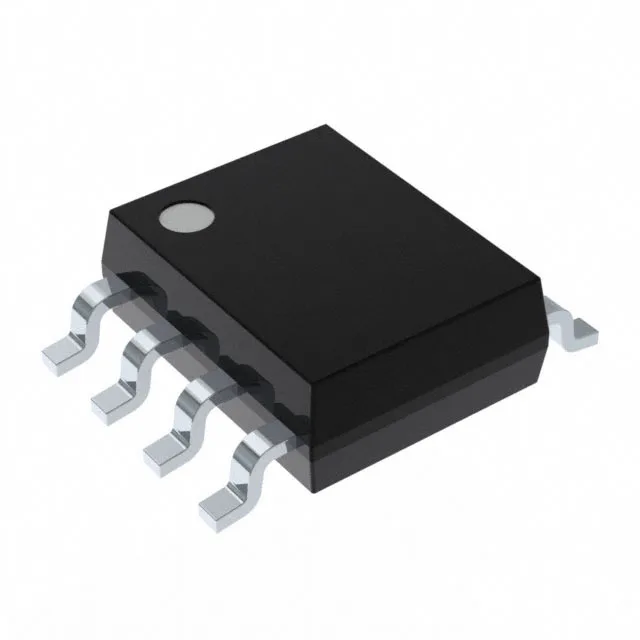
The supplier device package is 8-SOIC, so the ordering code and the package marking align. Not rated for automotive under-hood or outdoor industrial enclosures where ambient exceeds 70°C. For high-volume reflow, specify the tape-and-reel variant if one exists.
Lifecycle and compliance
ROHS3 compliant — the part meets the EU Restriction of Hazardous Substances directive including the four phthalates, which covers most global markets except where specific exemptions apply.