What the 200 ns turn-off means for a redundant supply
The MAX8536EUA+ is an N+1 ORing controller that drives an external N-channel MOSFET to isolate a faulted power rail in redundant supplies. When the input drops below the output, the gate pulls low in 200 ns — fast enough to keep the good rail from back-feeding into the failed one before the output bus dips. No internal switch here (confirms it), so the external FET's Rds(on) and gate charge set the conduction loss and the speed of the turn-off; pick a FET with low Qg to keep the 2 mA supply current from being the bottleneck in the gate drive. Supply range is 3V to 5.5V, which covers the common 3.3V and 5V backplane rails in telecom and base-station gear. The N:1 input-to-output ratio means it handles N+1 redundancy — one more supply than the load needs, so you lose one module and the system stays up.
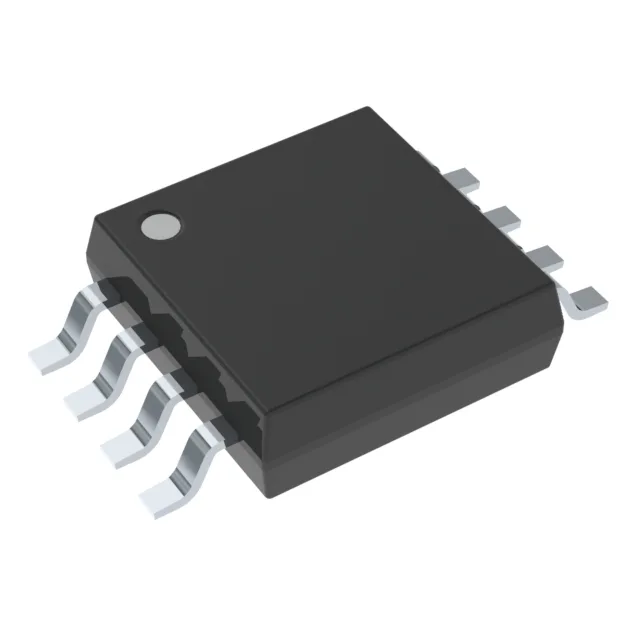
It comes in an 8-TSSOP or 8-MSOP (0.118-inch wide, 3.00 mm body) and the supplier device package is 8-uMAX/uSOP. That is a standard small-outline footprint — fits on a 2-layer board with a 0.65 mm pitch, no thermal pad to worry about.