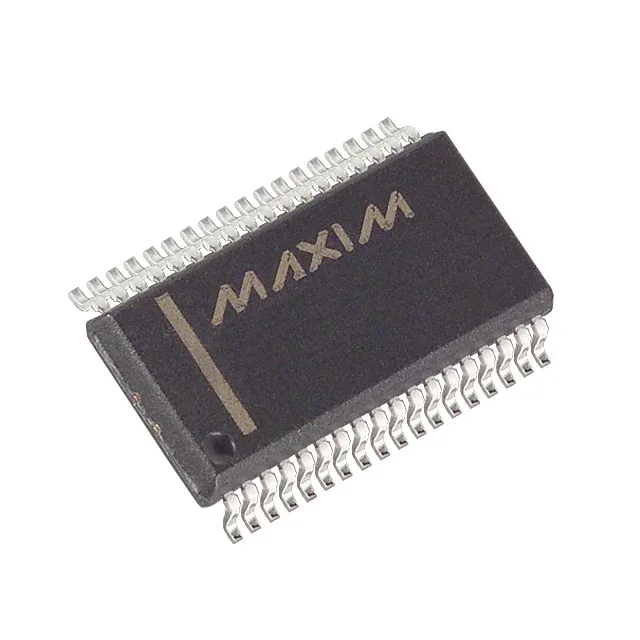
The MAX6956AAX+: The 180 µA typical supply current is the IC's own draw before the LED load — it sets the standby power floor for battery-powered or always-on indicator panels. The -40°C to +125°C operating temperature range qualifies the part for industrial and automotive ambient environments where the enclosure sees wide thermal swings. A 125°C junction rating means the die can sit near a hot processor or power stage without derating the LED drive current.
I²C interface and LED drive — what the bus controls
The I²C interface lets a host microcontroller address the MAX6956AAX+ over a two-wire bus, controlling individual LED brightness or on/off states without dedicating GPIO pins. The part is a constant-current LED driver, so the brightness is set by an external resistor and the I²C register value, not by the supply voltage tolerance. Because the interface is I²C, multiple MAX6956AAX+ devices can share the same bus lines — each has a unique slave address set by pin strapping. This scales the LED channel count without multiplying the MCU pins or adding a separate SPI chip-select for each driver.
36-SSOP package — board integration
The supplier device package is listed as 36-SSOP, which is the same mechanical outline as the 36-BSOP case code — a standard fine-pitch SOIC footprint. For a prototype run or a low-volume production line, this avoids the minimum reel quantity and the cost of a feeder changeover on the pick-and-place machine.