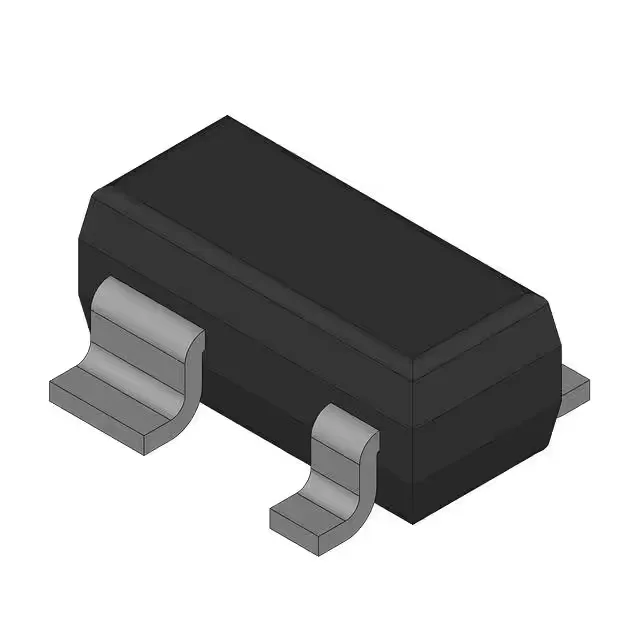
What this reset IC does — and the gotcha on the output
The MAX6808US26-T is a single-channel voltage supervisor from Maxim Integrated that monitors a 4.6V rail and asserts a reset signal when the supply drops below that threshold. It is a Simple Reset/Power-On Reset type, meaning it holds the reset output active for a typical 30 µs after the supply recovers, giving the system time to stabilize. The reset is active low, and the output is open drain or open collector — so on a field swap or a fresh board, remember that pin needs a pull-up resistor to whatever logic rail the downstream reset input expects. No pull-up, no reset signal. That is the one thing that trips people up when they drop this into a design without checking the output stage.
The 4.6V threshold is set for monitoring a nominal 5V supply. When the 5V rail droops to 4.6V or below, the reset fires. That gives about 8% margin below 5V, which is typical for catching brownouts or slow-start ramps without nuisance resets on normal ripple. If your system runs on 3.3V or 2.5V, this is not the part — the threshold is fixed, not adjustable. For a 5V industrial controller, motor drive, or PLC module, it is a clean fit.
Industrial temperature range — field-ready
No special derating needed across that range for the reset timing or threshold accuracy — the datasheet typicals hold.
Package and footprint — SOT-23-4
Housed in a SOT-23-4 (TO-253-4 / TO-253AA) package, surface mount. Four pins, small footprint — easy to hand-solder if you are doing a field repair or a prototype rework. The marking is usually minimal, so check the orientation against the datasheet drawing before you place it. No exposed pad, no thermal vias needed; it dissipates milliwatts.
Lifecycle and compliance — active, but watch the RoHS flag
One catch: it is marked RoHS non-compliant. If your BOM requires RoHS 5/6 or 6/6 exemption tracking, this part may not pass audit. Check your exemption policy before committing. For legacy or military/industrial builds that allow lead-bearing solder, it is fine.