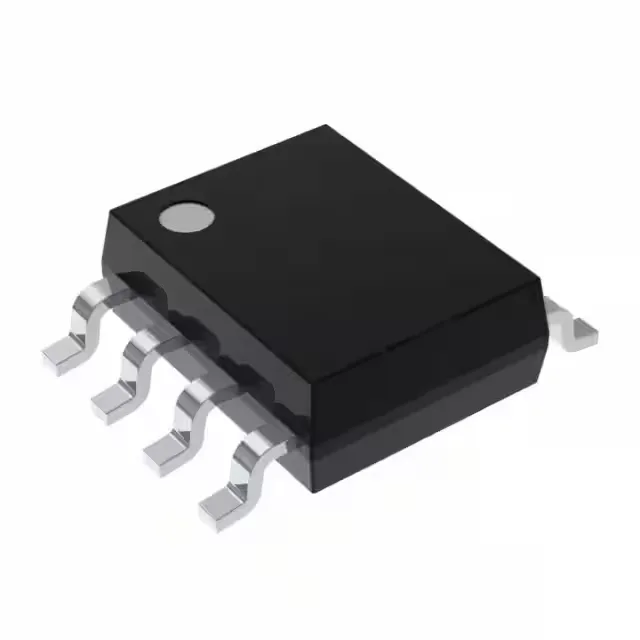
The MAX667ESA+T: The 8-SOIC footprint is a standard JEDEC outline with a 1.27 mm lead pitch, compatible with reflow soldering profiles typical for mixed-signal boards. The 250 mA output current ceiling and 0.35 V dropout at 200 mA define the load and headroom budget for the rail it serves.
With a maximum dropout voltage of 0.35 V at 200 mA, the input rail must stay at least 350 mV above the output voltage at that load to maintain regulation. For a 5 V fixed output, a 5.5 V input rail provides 0.5 V headroom — adequate for full load but marginal if the input sags under transient conditions. Quiescent current is 35 µA typical, rising to 20 mA maximum supply current. The 35 µA Iq makes this LDO suitable for always-on rails in battery-powered equipment where the regulator's own draw must not dominate the sleep budget. The 20 mA supply maximum occurs during dropout or fault conditions and should be factored into the upstream supply sizing. Input voltage range extends to 16.5 V maximum, covering 12 V nominal rails with margin for transients. The adjustable output range from 1.3 V to 16 V allows the same part to serve multiple rail voltages with external resistor dividers.
Control features and deployment context
Integrated control features include a dropout detector, enable pin, and low-battery detection. The enable pin allows the regulator to be shut down by a GPIO or supervisor, reducing quiescent current to near zero in sleep states. The dropout detector flags when the input-to-output differential falls below the regulation threshold — useful for sequencing or brownout detection in multi-rail systems. The 8-SOIC package's thermal resistance (typically 120-150 °C/W junction-to-ambient on a standard 2-layer board) limits power dissipation to about 0.4 W at 85°C ambient before derating is required.