What this supervisor does
The MAX6326XR30 from Maxim Integrated is a single-channel voltage supervisor that monitors a 3V rail and holds the microprocessor in reset for a minimum of 100ms after the supply rises above the threshold. The active-low, push-pull output drives the reset line directly without an external pull-up resistor. It comes in a compact SC-70-3 package, sized for space-constrained boards in industrial control, telecom, and embedded systems where a clean power-on reset sequence is required.
The 3V threshold is the trip point at which the reset asserts when the monitored supply drops below that level. For a 3.3V rail, this gives roughly 300mV of margin before a brownout triggers a reset — enough headroom for most linear regulators but tight if the rail is heavily loaded. If your design uses a fast-starting oscillator or a regulator with a slow ramp, verify that 100ms covers the full power-up sequence; otherwise, an external capacitor on the MR pin (if available on a sibling) extends the delay.
Active-low push-pull output
It drives the reset input of the monitored IC directly, sourcing or sinking current as needed. The active-low polarity is standard for most MCUs and DSPs — confirm the processor's reset input is active low before committing the BOM.
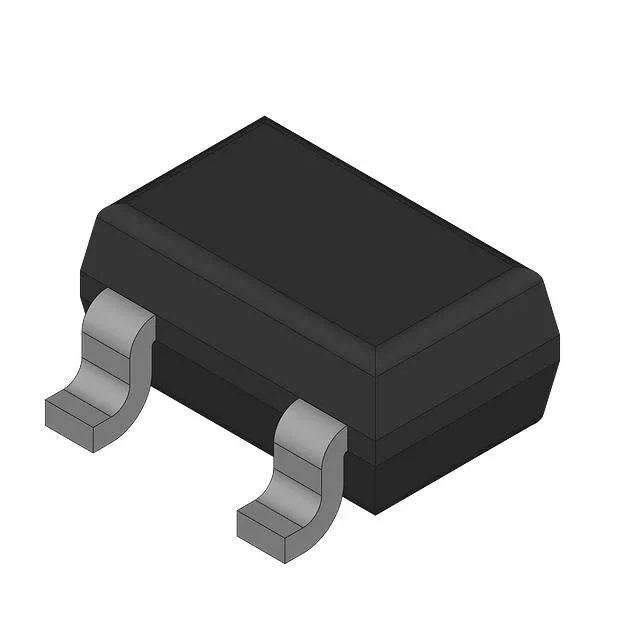
The SC-70-3 (SOT-323) footprint is one of the smallest for a voltage supervisor, occupying roughly 2mm × 2mm of board area. Surface-mount assembly is straightforward for standard reflow profiles. The three-pin layout — VCC, GND, and RESET — keeps routing simple: place it close to the monitored IC's supply pin to minimise noise pickup on the sense line.