AEC-Q100 grade — the qualification that matters for automotive BOMs
The MAX6175BASA/V+ is a precision series voltage reference from Maxim Integrated, part of the Automotive AEC-Q100 product line. It delivers a fixed 5V output with ±0.1% initial tolerance and a 10ppm/°C temperature coefficient, making it suitable for ADC reference, sensor excitation, and precision analog rails in automotive ECUs, ADAS modules, and industrial controls rated from -40°C to 125°C.
Precision specs — tolerance and drift drive the ADC channel budget
The ±0.1% initial accuracy and 10ppm/°C temperature coefficient define the reference error budget for a 12- or 16-bit SAR ADC. At 125°C the total drift from 25°C adds about 1000 ppm, or 5 mV on a 5 V output — well within the LSB budget for 12-bit systems but requiring a calibration step for 16-bit designs that need the full INL range. Noise is specified at 9µVp-p from 0.1 Hz to 10 Hz and 14.5µVrms from 10 Hz to 10 kHz, which keeps the reference from dominating the noise floor in a 12-bit system at 5 V full scale.
Input range and output drive — sizing for the rail
The series reference operates from a 7 V to 40 V input, so it can be fed directly from a 12 V or 24 V automotive battery rail without a preregulator. Output current is rated at 30 mA, enough to bias multiple op-amps or a small sensor bridge. Supply current is a low 700 µA, which matters for always-on modules where quiescent draw is a budget line item.
Package and mounting — 8-SOIC, surface-mount assembly
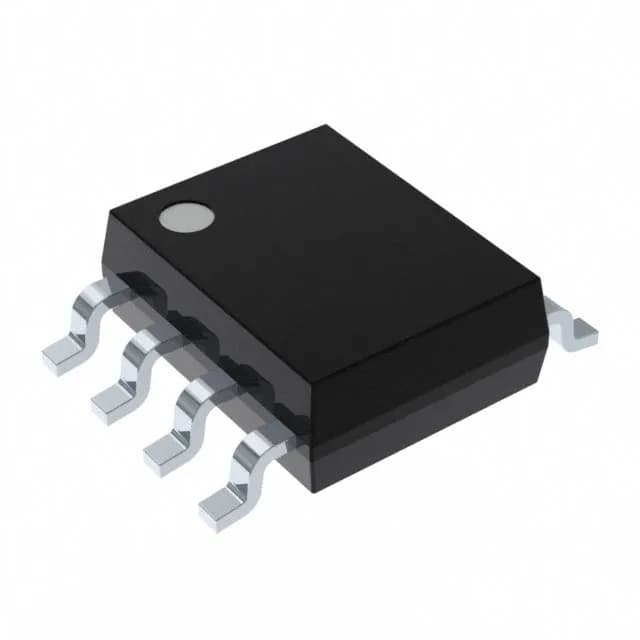
Housed in an 8-SOIC package (0.154" width, 3.90 mm body), the part is a standard surface-mount footprint shared by many voltage references and op-amps. The supplier device package is listed as 8-SOIC. No exposed pad — thermal performance relies on the SOIC body and board copper.
Lifecycle — active production, no LTB concern
ROHS3 compliant. For new designs requiring an AEC-Q100-qualified precision reference, this part is a current-production choice without last-time-buy risk.