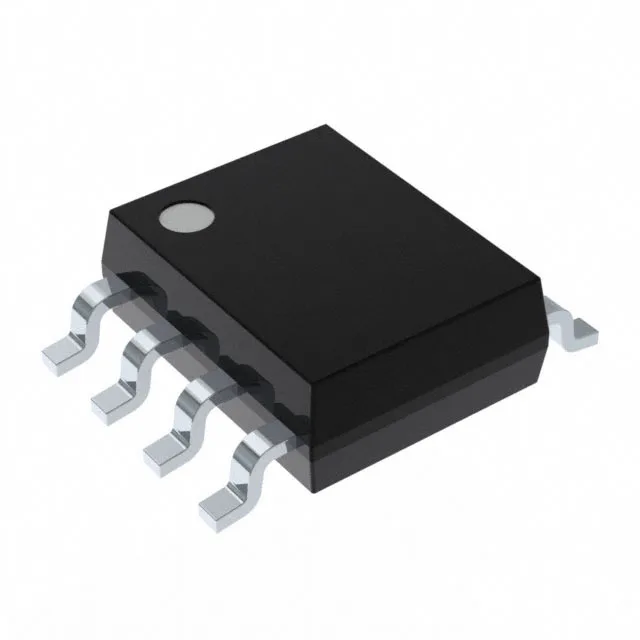
1.25V shunt reference — what the ratings mean for your ADC rail
The MAX6006BESA+T: This is a shunt-type voltage reference, functionally equivalent to a precision Zener diode. It regulates a fixed 1.25 V output by sinking current through an external series resistor — the load and the reference share the same current path. The ±0.5% tolerance means the output sits between 1.24375 V and 1.25625 V at 25 °C, tight enough for a 12-bit ADC reference without external trimming. The 2 mA output current rating sets the maximum load the reference can drive while staying in regulation. A typical SAR ADC input draws under 1 mA, so this part comfortably biases the reference input of an ADS79xx or similar converter. Below the 1 µA cathode current minimum, the shunt stops regulating — the series resistor must be sized so the total current (load + cathode) never drops below that floor. At 1.25 V output, that is roughly 24 ppm of the reference voltage, well below the quantization noise of a 16-bit ADC at full scale.
Industrial temperature grade and package fit
A 75 ppm/°C temperature coefficient means the output drifts by about 75 µV for every degree Celsius change — across the full 125°C span the total drift is roughly 9.4 mV, or 0.75% of the 1.25 V output. For a 12-bit system with a 4.096 V reference, that drift stays under 1 LSB. The Tape & Reel option feeds directly into a pick-and-place machine; the Cut Tape variant suits prototype or low-volume builds without committing to a full reel.
Compliance and sourcing
Fully ROHS3 compliant — no exemptions, no restricted substances to track through the supply chain.