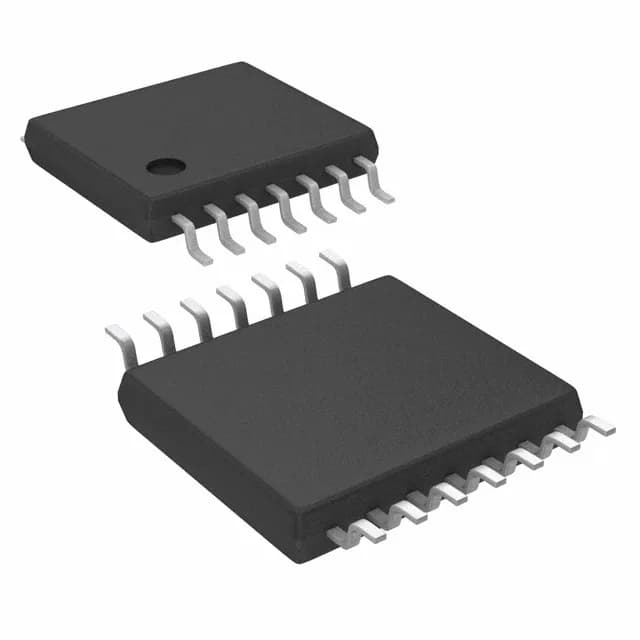
Analog Devices MAX5487EUD+ — Memory (DRAM / SRAM / Flash / EEPROM)

MAX5487EUD+ 10kΩ Linear Digital Potentiometer, 256 Taps, SPI

MPNMAX5487EUD+
End of Life

Analog Devices MAX5487EUD+, dual 10kΩ linear-taper digital potentiometer, 256 tap positions, SPI interface, non-volatile wiper storage, 14-TSSOP package, -40°C to 85°C operation.

$6.16Ref. price · indicative, final on quote
Packaging14-TSSOP (0.173", 4.40mm Width)
StockContact for availability
MOQ1 pcs
  • 100% new & originalTraceable channels only — no refurbs, no pulls, no remarked parts.
  • Date & lot codes on quoteStated per line before you commit; label photos on request.
  • MSL-compliant ESD packingMoisture-sealed bags with indicator cards; reels photo-verified.
  • PayPal buyer protectionPay by T/T, PayPal or Payoneer — card payments covered end to end.

Specifications

MAX5487EUD+ Technical Specifications
ParameterValue
Memory typeNon-Volatile
Mounting typeSurface Mount
Voltage2.7V ~ 5.25V
InterfaceSPI
Operating temperature-40°C ~ 85°C
TaperLinear
PackageTube
Tolerance±25%
ConfigurationPotentiometer
Number of taps256
Case14-TSSOP (0.173\", 4.40mm Width)
Resistance10k
Number of circuits2
Temperature coefficient35ppm/°C
Resistance - wiper (Ohms)325

Product details

Dual 10kΩ linear pot with non-volatile wiper memory

The MAX5487EUD+ is a dual 10kΩ digital potentiometer from Analog Devices with a linear taper and 256 tap positions per channel, controlled via a standard SPI interface. The non-volatile memory retains the wiper setting at power-off, so the part powers up at the last programmed position without host intervention. Operating from a 2.7V to 5.25V supply and rated over -40°C to 85°C, it fits industrial control loops, power-supply trimming, and sensor calibration where the wiper setting must survive a power cycle.

256 taps, 325 Ω wiper resistance, 35 ppm/°C tempo

Each of the two potentiometers offers 256 tap positions, giving a step size of roughly 39 Ω per tap on the 10kΩ end-to-end resistance. The typical wiper resistance is 325 Ω, which adds a fixed series offset that matters when the pot is used as a voltage divider with a high-impedance load. The ±25% absolute resistance tolerance means the end-to-end value can vary from 7.5 kΩ to 12.5 kΩ. In ratiometric circuits (e.g., a voltage divider feeding an ADC reference) the ratio tracks well, but absolute-resistance-critical designs should plan for a calibration trim.

Active production, 14-TSSOP package

It is ROHS3 compliant and supplied in a 14-lead TSSOP package (4.40 mm body width). No immediate obsolescence risk — the part is a current catalog item from Analog Devices.

Frequently asked questions

Is the MAX5487EUD+ pin-to-pin compatible with the AD5260?

The AD5260 is a single-channel 256-tap digital pot from Analog Devices in a 14-TSSOP package. The MAX5487EUD+ is a dual-channel part, so the pinout and register map are different. They are not drop-in replacements. For a single-channel alternative, the MAX5486EUD+ (single 10kΩ, same package) is a closer match.

Can I substitute the MAX5487EUD+ with the MCP41010?

The MCP41010 is a single 10kΩ digital pot with 256 taps and SPI, but it is in an 8-pin DIP/SOIC package and has volatile wiper memory. The MAX5487EUD+ is dual-channel, non-volatile, and in a 14-TSSOP footprint. They are not pin-compatible and the memory type differs — a substitution would require a board spin and firmware change.

Is the MAX5487EUD+ compatible with 3.3V logic?

Yes. The supply range is 2.7V to 5.25V, and the SPI logic thresholds scale with VDD. At a 3.3V supply, the input high threshold is typically 0.7 × VDD ≈ 2.3V, which is met by 3.3V CMOS logic. No level shifter is needed when the host MCU runs at the same rail.

Can the MAX5487EUD+ be used for audio volume control?

The linear taper is not ideal for audio volume because human hearing perceives loudness logarithmically. A logarithmic (audio) taper pot like the MAX5488 (10kΩ, log taper) would give a more natural volume curve. The MAX5487EUD+ can be used in a digitally-controlled gain stage if the linear steps are acceptable or corrected in firmware.