Where it fits — and what the ratings mean
Wiper resistance is 50Ω typical. That is low enough that it does not significantly shift the divider ratio at mid-to-high settings, but at the lowest few taps the wiper resistance becomes a larger fraction of the total. If the design runs the wiper near ground, factor that 50Ω into the bottom-leg impedance. The operating temperature range is -40°C to 85°C, which covers most industrial control cabinets, outdoor telecom gear, and automotive cabin environments. Not rated for under-hood or engine bay, but fine for the passenger compartment or a climate-controlled enclosure. The ±25% tolerance on the end-to-end resistance is typical for digital pots — the absolute resistance value is loose, but the ratiometric accuracy between taps is tight. If the design uses the pot as a voltage divider, the tolerance cancels out. If it is used as a variable resistor (rheostat), the absolute resistance tolerance means the actual resistance at a given tap code can vary by ±25% from part to part. Plan for that in the circuit design.
Package and footprint
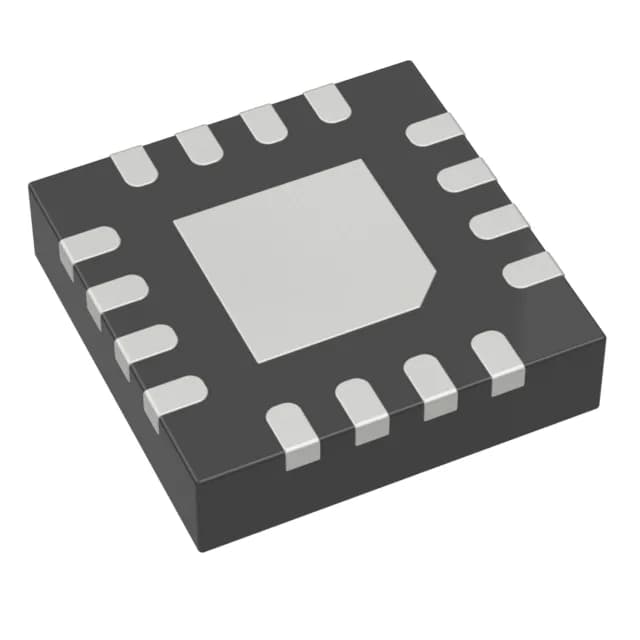
The MAX5482ETE+T comes in a 16-pin TQFN package measuring 3 mm x 3 mm (supplier device package 16-TQFN). The exposed pad underneath provides a thermal path to the PCB ground plane. The part is surface-mount only; no through-hole variant exists for this order code.