8-bit R-2R DAC in a 16-QSOP — what the ratings mean for the BOM
The MAX5480BEEE+ is an 8-bit multiplying DAC with an R-2R ladder architecture, delivering a voltage or current unbuffered output. Its 250 ns settling time means it can update at roughly 4 MHz — fast enough for waveform generation or closed-loop trim in a control loop, but not a video-rate part. The ±0.5 LSB max INL guarantees monotonicity across the 8-bit range, so the output never steps backward as the code increments — critical for servo or calibration applications where a non-monotonic DAC would cause oscillation. The parallel data interface latches all eight bits simultaneously — no serial clock to manage, but it ties up eight GPIO lines on the host controller. The external reference lets the full-scale output track a precision voltage or a ratiometric supply rail, which is useful when the DAC shares a reference with an ADC in the same signal chain.
Package, rework, and board-fit
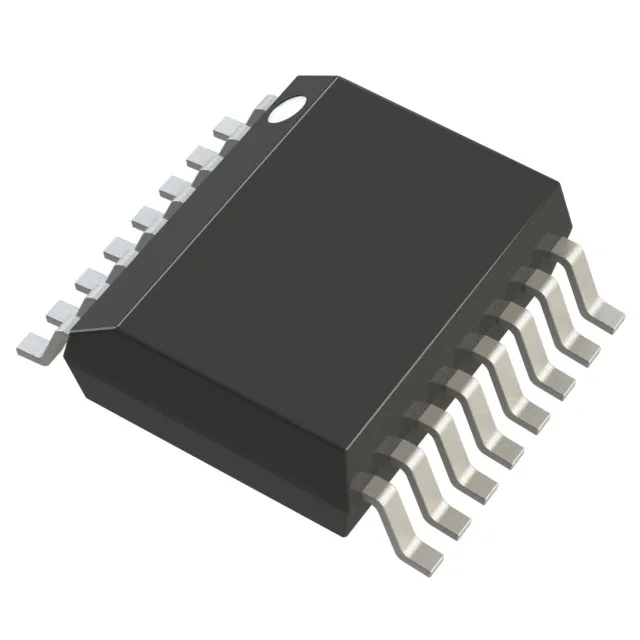
Housed in a 16-QSOP, which is the same 3.90 mm-wide body as the 16-SSOP but with a finer lead pitch. The QSOP footprint is compact — about 5 mm × 4 mm — so it fits on tight mixed-signal boards. The leads are visible and accessible for hand rework; a hot-air station at 300 °C with a fine nozzle lifts the part cleanly if the pad layout has adequate thermal relief. Pin 1 is marked by a chamfer on the package body, not a dot — check the orientation before placement. Supplied in a tube, which is the standard handling format for this package. No tape-and-reel option is listed, so for automated pick-and-place the tube must be transferred to a feeder tray or the parts hand-loaded.
Temperature range and supply rails
The differential output means the DAC can drive a balanced load or feed a differential-input ADC directly, rejecting common-mode noise picked up on the interconnects.
Analog Devices lists the MAX5480BEEE+ as active with ROHS3 compliance. No pin-compatible second source is documented, so the BOM line is single-sourced to this ADI order code.