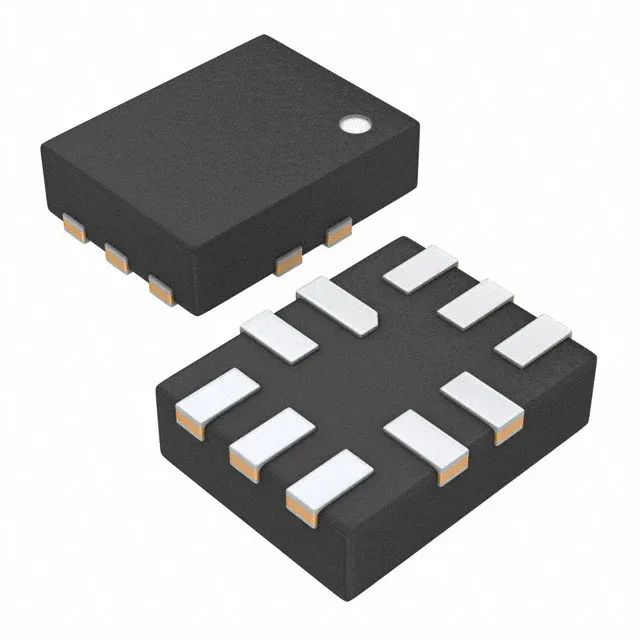
What this USB 2.0 DPDT switch does on the board
The MAX4984EEVB+T is a single-channel DPDT analog switch from Analog Devices, purpose-built for USB 2.0 signal routing. It handles the full-speed (12 Mbps) and high-speed (480 Mbps) data lines without distorting the eye diagram, thanks to a 950 MHz -3dB bandwidth that keeps the signal edges clean. The switch topology is DPDT — two poles, two throws — which maps directly to the D+ and D- differential pair in a USB cable. One throw connects the host controller to the USB connector; the other throw can route the same pair to an alternate path, like a charge-only port or a debug header.
Key parametrics that decide the fit
On-state resistance is 10 Ohm max — low enough that the voltage drop across the switch at the USB 2.0 high-speed current draw (typically 50 mA per signal) stays under 5 mV, well within the 400 mV differential signaling margin. Higher Rds(on) would eat into the eye opening at the receiver. The switch does not require a separate negative rail — the signal swing is ground-referenced. This covers outdoor telecom cabinets, automotive cabin electronics, and factory-floor USB hubs that see ambient heat from nearby power supplies.
Package and hand-solderability
That is a tiny footprint — the pads are likely 0.4 mm pitch or finer — so hand-soldering with a fine-tip iron is possible but requires a steady hand and a magnifier. A hot-air rework station is the safer bet for a one-off prototype. It is offered in Tape & Reel (TR) and Cut Tape (CT) options. The CT variant is what you would order for a bench prototype or a small production run without committing to a full reel quantity.
It is ROHS3 compliant, which means it meets the latest EU restriction on hazardous substances, including the four phthalates added in the 2015 amendment. No special handling or exemption paperwork needed for EU-market products.