What this SPDT switch brings to a signal chain
The Analog Devices MAX4729EXT+T is a single-pole double-throw (SPDT) analog switch in a compact SC-70-6 package. It routes one common terminal to either of two selectable outputs with a maximum on-resistance of 5.5 ohms, making it a fit for low-voltage signal routing in test equipment, audio path switching, or RF front-end selection where insertion loss matters. The 300 MHz -3 dB bandwidth and -67 dB crosstalk at 1 MHz mean this part can handle high-speed analog or digital signals without bleeding between channels — useful for multiplexing video lines or switching RF paths up to the low UHF band. Supply range from 1.8 V to 5.5 V covers common logic rails without needing a separate analog supply, simplifying the power tree on a mixed-signal board.
Switching speed and charge injection — what they mean for the BOM
Maximum turn-on time of 45 ns and turn-off time of 26 ns allow this switch to keep up with fast control signals — think sample-and-hold front-ends or clocked multiplexers where the switch must settle before the next acquisition cycle. Charge injection of 3 pC is low enough that it won't glitch a precision ADC input beyond a few millivolts, provided the source impedance is moderate. Channel-to-channel on-resistance matching of 50 milliohms keeps the insertion loss consistent between the two signal paths — a detail if you are switching gain-setting resistors or matched attenuators.
Package and mounting — fits tight layouts
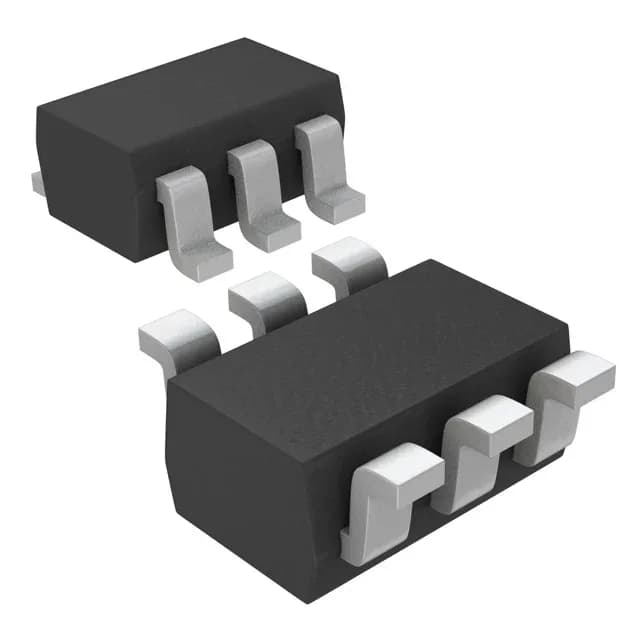
Housed in a 6-lead SC-70 (SOT-363) package, the MAX4729EXT+T takes up roughly 2 mm × 2 mm of board area. Surface-mount assembly is standard; the small footprint leaves room for passives in dense RF or portable designs. Operating temperature range of -40°C to 85°C covers industrial and outdoor telecom enclosures — no issue for a base-station transceiver or a panel-mount controller running warm.
Sourcing and lifecycle — active, no obsolescence concern
The MAX4729EXT+T carries an active lifecycle status and is RoHS3 compliant. No end-of-life notice or last-time-buy window is in effect, so it can be specified into new BOMs without near-term requalification risk.