2.5 Ohm on-resistance and signal-path integrity
The MAX4661EAE+ is a quad SPST-NC analog switch from Analog Devices, with a maximum on-resistance of 2.5 Ohm. This low RON keeps signal attenuation and distortion minimal in precision analog paths, such as multiplexing sensor inputs or routing audio signals through a test head. Channel-to-channel matching is held to 100 mOhm max, so the insertion loss across all four switches tracks within a tight band — important when the switch bank is used in a gain-ranging or attenuator network where each leg must present the same impedance.
Supply rails and switching performance
This covers common industrial rails (5 V, 12 V, 15 V, 24 V) and allows the switch to pass bipolar signals when using split supplies. Switching times are 275 ns max for turn-on and 175 ns max for turn-off, fast enough for multiplexing data-acquisition channels at moderate scan rates. The charge injection of 300 pC is a figure to budget for in sample-and-hold front ends — it injects a fixed charge packet into the hold capacitor each time the switch opens. Off-leakage current is 500 pA max at 25°C, rising with temperature. For a 10 MOhm source impedance, this leakage contributes a 5 mV offset error — negligible in most precision circuits but worth checking against the system error budget.
Crosstalk and channel isolation
Crosstalk between channels is -59 dB at 1 MHz. In a multi-channel multiplexer, this means a 1 Vpp signal on an adjacent channel couples about 1.1 mV into the active channel at 1 MHz — acceptable for 12-bit systems but a consideration for 16-bit or higher resolution at higher frequencies. Channel capacitance is 55 pF for both source and drain when off. This capacitance, combined with the source impedance, forms a low-pass filter that limits the bandwidth of the switched signal — a 10 kOhm source and 55 pF gives a 290 kHz corner frequency.
Package, temperature, and compliance
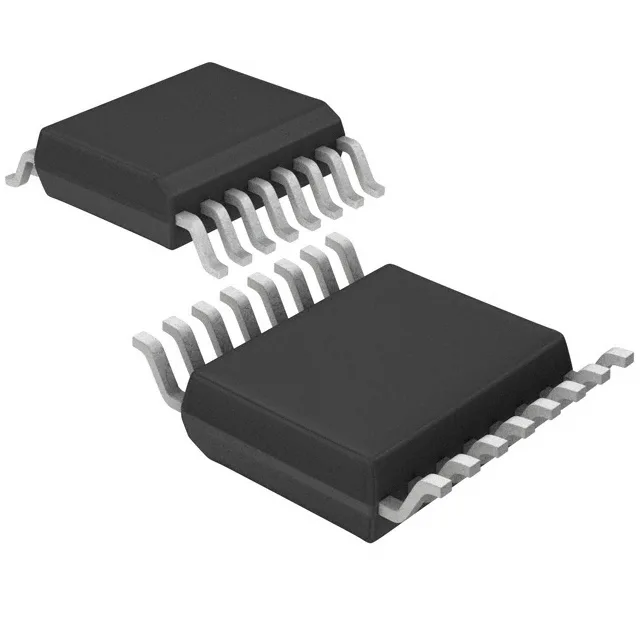
Analog Devices lists this part as Active in production and compliant with ROHS3.