What this switch does and where it fits
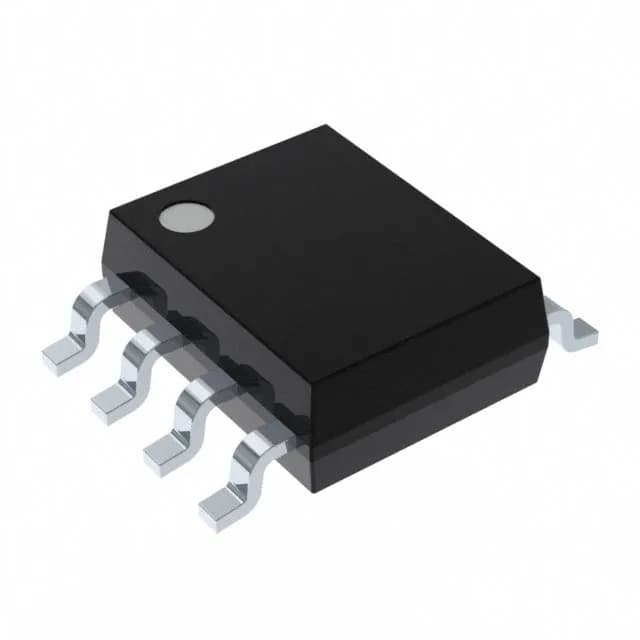
The MAX4656ESA+ is a single-pole, single-throw (SPST) normally-open analog switch from Analog Devices. It routes one signal channel through a 10 Ohm max on-resistance path, with a 210 MHz -3dB bandwidth that keeps high-frequency analog or digital signals clean. The switch handles a wide supply range: single 9V to 40V, or dual ±4.5V to ±20V, making it usable in industrial control, test equipment, and instrumentation where the rails are not always ±15V. The 8-SOIC package is a standard footprint, and the -40°C to +85°C temperature grade covers most factory-floor and outdoor telecom enclosures.
10 Ohm on-resistance – what it means for your signal
With a maximum on-resistance of 10 Ohm, this switch introduces a known series resistance into the signal path. For a low-impedance source driving a high-impedance load, the voltage drop is negligible. But if you are switching a precision analog reference or a low-level sensor signal, that 10 Ohm in series with the load impedance forms a divider – budget for it in your gain or offset calibration. The resistance is flat enough across the analog range that it does not add noticeable distortion for audio or 12-bit data acquisition.
Switching speed and charge injection
Turn-on time is 200 ns max, turn-off is 100 ns max – fast enough to mux audio channels, route test signals, or switch gain-setting resistors without missing a sample period. Charge injection is 23 pC typical, which means a small voltage glitch appears on the channel when the switch opens or closes. In a high-impedance node, that glitch can take microseconds to settle; add a small capacitor to the output if your ADC conversion starts right after the switch toggles.
Leakage and capacitance – the off-state picture
Off-state leakage is 1 nA max, which is low enough that it will not load a high-impedance source or drain a sample-and-hold cap noticeably. Channel capacitance is 25 pF on both source and drain pins when off. That 25 pF combined with the 10 Ohm on-resistance gives a roughly 63 MHz RC roll-off when the switch is on – well above the 210 MHz bandwidth, so the cap does not limit the passband. In a multiplexed system, the off-capacitance of multiple switches on a shared bus adds up; keep the total below a few hundred pF to avoid crosstalk.
Lifecycle and sourcing
No official second source or pin-compatible drop-in from another manufacturer is listed, but the 8-SOIC footprint is common enough that a parametric search for SPST switches with similar supply range and on-resistance will turn up alternatives if dual-sourcing is required.