Signal integrity and switching speed
The MAX4652ESE+T: Crosstalk between channels is rated at -100 dB at 1 MHz, which means a 1 Vpp signal on one channel couples less than 10 µV into an adjacent off channel — clean enough for precision audio or low-level sensor multiplexing. The switch toggles in 14 ns (turn-on) and 8 ns (turn-off), so it can keep up with fast ADC front-ends or sample-and-hold circuits without introducing timing skew.
Supply, charge injection, and leakage
Charge injection is 2 pC typical — when the switch opens, that tiny packet of charge dumps into the load capacitance, so for a 10 pF sampling cap the voltage glitch is about 200 µV. Off-leakage current is 100 pA max, which won't upset a high-impedance node like a pH probe or photodiode amplifier.
Package, temperature range, and compliance
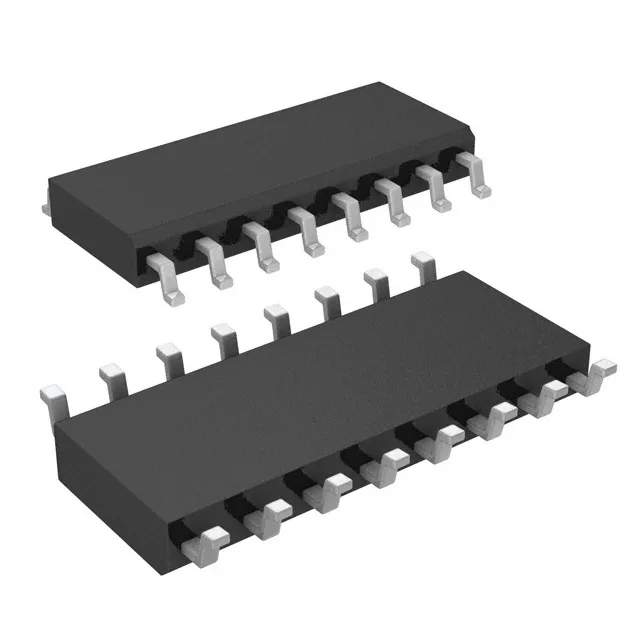
Housed in a 16-SOIC (0.154-inch wide, 3.90 mm body) — standard footprint, easy to hand-solder or reflow.
Channel capacitance and bandwidth implications
Each channel presents 16 pF of capacitance to ground when off, and the same 16 pF on the drain side. That capacitance, combined with the 4 Ohm on-resistance, forms an RC low-pass filter with a -3 dB corner around 2.5 GHz — well above any real signal bandwidth, so you won't see roll-off in audio or low-MHz analog paths. The 1:1 multiplexer/demultiplexer circuit means each switch is a simple series pass element, no internal routing confusion.