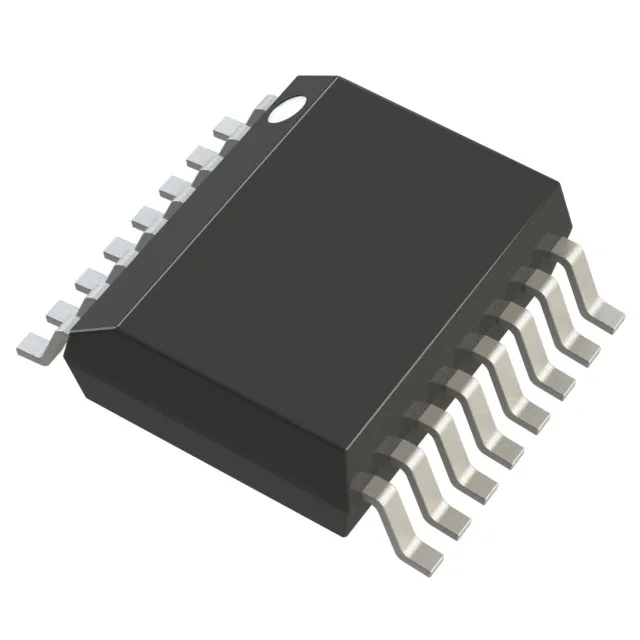
Dual SPDT video switch with 350 MHz bandwidth
The MAX4567EEE+: It is designed for routing analog video signals in applications such as CCTV, broadcast, and test equipment where signal integrity at high frequencies is critical. The -3 dB bandwidth of 350 MHz ensures minimal attenuation of standard-definition and high-definition video signals up to 1080p, preserving edge rates and color burst timing through the switch matrix.
On-resistance and supply rails
Maximum on-state resistance is 60 Ohm, which is typical for a CMOS analog switch of this bandwidth class. Supply flexibility is a strong point: single-supply operation from 2.7 V to 12 V, or dual supplies from ±2.7 V to ±6 V. This allows the switch to sit in a ±5 V analog rail system or a single 5 V digital video bus without a separate negative rail generator.
Break-before-make and bidirectional routing
The break-before-make switching action ensures that the two signal paths are never momentarily shorted together during channel transition — critical for preventing glitches in video sync or audio-follow-video routing. The T-switch configuration (series-shunt-series topology) improves off-isolation at high frequencies compared to a simple series switch. Bidirectional operation means the SPDT can route a signal from common to either pole, or from either pole back to common, simplifying board layout when the signal direction is not fixed.
Housed in a 16-lead SSOP (0.154-inch body width, 3.90 mm) or the functionally identical 16-QSOP supplier device package. The QSOP variant has a finer lead pitch (0.635 mm vs 0.65 mm for SSOP) — confirm the footprint on the PCB layout matches the specific package variant received. Tube packaging is standard for this order code.
Analog Devices lists the MAX4567EEE+ as Active in production.