What the 200 kHz gain-bandwidth and 0.045 V/µs slew rate mean for your signal chain
These numbers tell you this is a low-frequency, low-power part — think sensor conditioning, battery monitoring, or DC-level shifting where the signal changes slowly. For a 1 V peak output swing, the full-power bandwidth works out to roughly 7 kHz — a good sanity check if you are filtering audio or amplifying a thermocouple.
It draws just 24 µA of supply current, which makes it a candidate for always-on or battery-powered circuits where every microamp counts.
Package and temperature grade — where it goes on the board
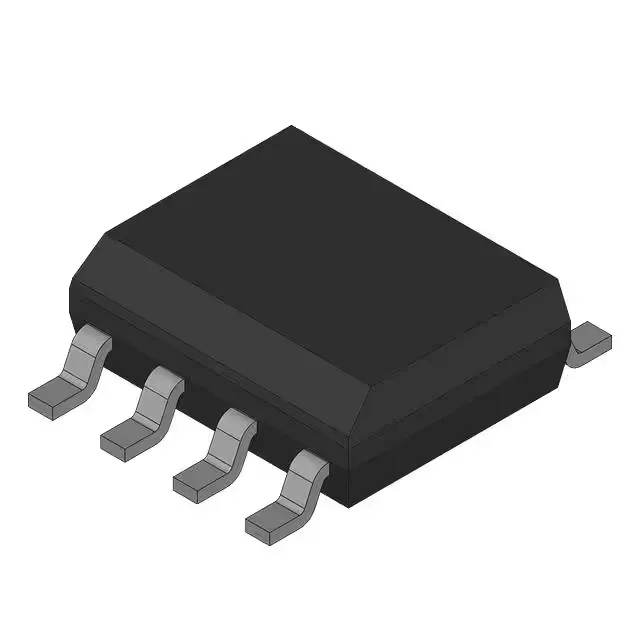
Housed in a SOT-23-8 package (surface-mount, 8 leads), it is a small-footprint part suited for compact PCBs. Output is rail-to-rail, which helps when you are running on a low supply and need every millivolt of swing into an ADC or comparator.