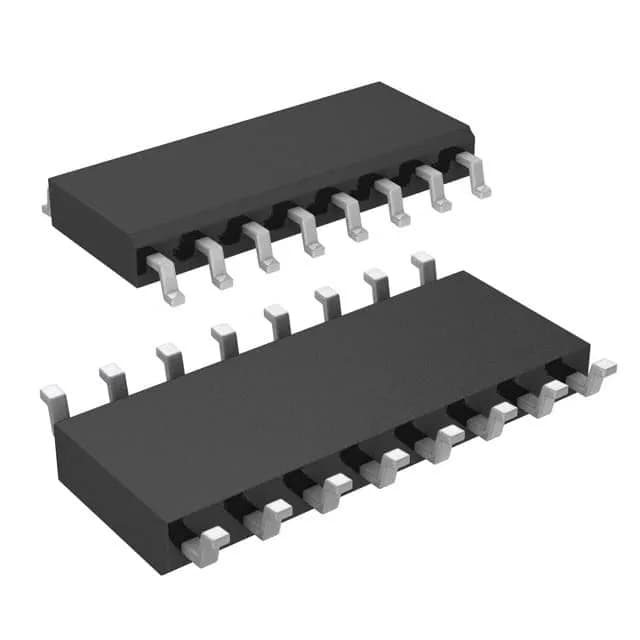
High-speed differential line driver for video and RF
Its 4300 V/µs slew rate and 330 MHz -3 dB bandwidth put it squarely in the territory of composite-video distribution, high-resolution RGB line driving, and RF signal buffering where a single-ended to differential conversion is needed. The differential output is the key feature here — it gives you common-mode rejection on the receive end, which matters when the cable runs past switching supplies or motor drives. The 46 mA supply current is the quiescent draw; add the load current on top of that. Each channel can deliver 130 mA, which is enough to drive a 75 Ω termination to a 2 V swing with headroom. In a 16-SOIC package, the thermal path is through the leads — no exposed pad — so at full output into a heavy load at 85 °C ambient, junction temperature needs a quick calculation.
Active lifecycle — no end-of-life pressure
The ROHS3 compliance is current, so no conflict with EU or similar regulatory requirements.
What 4300 V/µs and 330 MHz mean for the signal path
A 4300 V/µs slew rate means this amplifier can swing its output by several volts in under a nanosecond. For a 2 V peak-to-peak signal, the rise time is about 0.5 ns. That is fast enough to pass a 1080p video signal with negligible slew-induced distortion, or to buffer a high-speed DAC output without rounding off the transitions. The 330 MHz bandwidth is the small-signal -3 dB point; with a large-signal swing the bandwidth will be lower, but still comfortably above the 100 MHz or so that HD video needs. If you are driving a cable, the differential output structure also gives you a natural way to implement a balanced line driver with a single amplifier — no external transformer needed.
Package and mounting — 16-SOIC, no exposed pad
There is no exposed thermal pad, so all heat dissipation goes through the 16 leads into the PCB copper. For a part that can dissipate over 0.5 W at full output, that means the PCB layout should use wide traces on the supply and output pins, and preferably a few vias to an internal ground plane. The shipping medium is Tube, not Tape & Reel, so if your pick-and-place line expects reels, factor in the tube-to-reel transfer or order a reel variant if one exists.