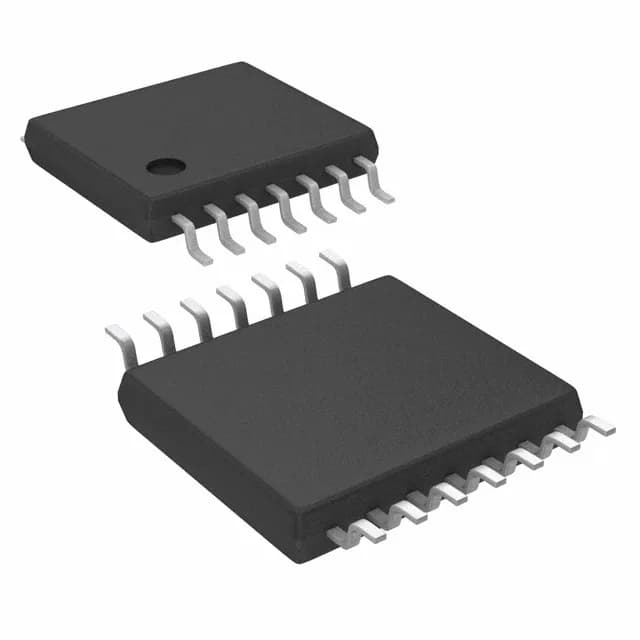
Analog Devices MAX44245AUD+T — Analog & Data Acquisition

MAX44245AUD+T Zero-Drift Op-Amp, Quad, 1 MHz, 14-TSSOP

MPNMAX44245AUD+T
End of Life

Maxim Integrated MAX44245AUD+T, Chopper (Zero-Drift) Amplifier, 4 Circuits, Rail-to-Rail Output, 1 MHz Gain Bandwidth, 0.7 V/µs Slew Rate, 2 µV Input Offset, 2.7 V to 36 V Supply, 90 µA Supply per Channel, -40°C to 125°C, 14-TSSOP Package.

$9.78Ref. price · indicative, final on quote
Packaging14-TSSOP (0.173", 4.40mm Width)
StockContact for availability
MOQ1 pcs
  • 100% new & originalTraceable channels only — no refurbs, no pulls, no remarked parts.
  • Date & lot codes on quoteStated per line before you commit; label photos on request.
  • MSL-compliant ESD packingMoisture-sealed bags with indicator cards; reels photo-verified.
  • PayPal buyer protectionPay by T/T, PayPal or Payoneer — card payments covered end to end.

Specifications

MAX44245AUD+T Technical Specifications
ParameterValue
Output typeRail-to-Rail
Mounting typeSurface Mount
Amplifier typeChopper (Zero-Drift)
Voltage - input offset2 µV
Voltage - supply span2.7 V
Current - supply90µA (x4 Channels)
Current - input bias150 pA
Current - output (Channel)40 mA
Operating temperature-40°C ~ 125°C
Gain bandwidth product1 MHz
PackageTape & Reel (TR); Cut Tape (CT)
Slew rate0.7V/µs
Case14-TSSOP (0.173\", 4.40mm Width)
Number of circuits4

Product details

What this quad zero-drift op-amp brings to the board

The Maxim Integrated MAX44245AUD+T is a quad-channel chopper-stabilized (zero-drift) operational amplifier in a 14-TSSOP surface-mount package. It is designed for precision DC signal conditioning where offset drift over temperature and time would otherwise swamp the measurement — think thermocouple amplifiers, strain-gauge bridges, current-sense front-ends, and medical instrumentation that runs from a single 2.7 V to 36 V rail. The zero-drift architecture keeps input offset voltage at 2 µV typical, which means you are not spending board space on trim pots or digital calibration routines for every channel. That offset stays tight across the full -40°C to 125°C temperature range, so the part works in an engine bay or an outdoor industrial enclosure without accuracy walking away as the sun heats the panel.

Slew rate and bandwidth — what they mean for your signal

The 0.7 V/µs slew rate and 1 MHz gain-bandwidth product tell you this is a DC-precision part, not a high-speed amplifier. Use it where the signal bandwidth stays under a few tens of kilohertz — that covers most sensor outputs, thermocouples, RTDs, and bridge circuits. The 40 mA output current per channel is enough to drive a reference input, a modest headphone load, or the analog input of a typical microcontroller ADC. It is not a line driver or a power buffer — keep the load impedance above a few hundred ohms if you want the rail-to-rail swing to hold.

Package and supply flexibility for the BOM

Input bias current is 150 pA typical, which is low enough for high-impedance sources like pH probes or photodiode amplifiers, provided you keep the source impedance under a few megaohms.

Lifecycle and sourcing — active, no LTB risk

The MAX44245AUD+T carries an Active lifecycle status and is ROHS3 compliant. That means you can qualify it into a new design today without worrying about a forced redesign two years from now.

Frequently asked questions

Is MAX44245AUD+T obsolete or active?

The MAX44245AUD+T is Active in production — no end-of-life notice, no last-time-buy window. It is a current-design-in part, not a sunsetted line.

Does MAX44245AUD+T support single-supply operation?

Yes. The supply voltage range is 2.7 V to 36 V, and the output is rail-to-rail, so it runs cleanly on a single positive supply. No negative rail needed for signals that stay within the supply rails.

What is the closest pin-compatible alternative to MAX44245AUD+T?

Within the Maxim (now Analog Devices) zero-drift family, the MAX44245 is the quad-channel variant. A direct same-function peer would be another quad zero-drift op-amp in a TSSOP-14 package, such as the ADA4522-4 from Analog Devices or the OPAx388 series from Texas Instruments — but verify pin compatibility against your specific layout before swapping. No single exact second-source replacement is listed in the official cross-reference for this order code.