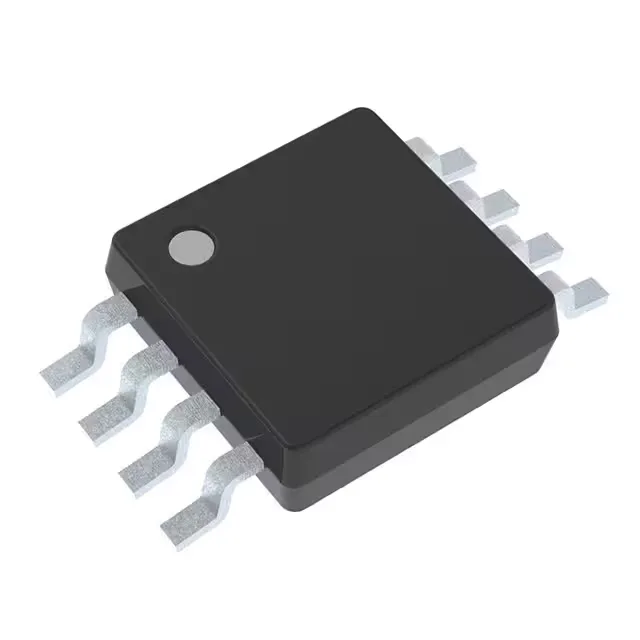
The Analog Devices MAX4377TEUA is a dual-channel current sense amplifier in an 8-µMAX package. The dual-channel configuration lets you monitor two independent rails — for example, a 12 V power bus and a 5 V peripheral rail — without adding a second amplifier IC. The supply range spans 3 V to 28 V, which covers 3.3 V logic rails up through 24 V industrial buses.
The 2 MHz bandwidth sets the upper frequency of current ripple the amplifier can track. If you are sensing current in a switching power supply running at 500 kHz, the amplifier will pass the fundamental and a couple of harmonics, giving you a usable waveform for overcurrent detection or average-current feedback. For slower loads — a battery charger, a DC fan — the bandwidth is more than adequate, and the slew rate gives you clean edge response without ringing.
The 28 V maximum gives headroom on a nominal 24 V supply — you can tolerate a 4 V overvoltage transient without exceeding the absolute maximum. Each channel draws 1 mA typical, so the total supply current is 2 mA — negligible in a system that already burns 50 mA for the microcontroller.
There is no LTB window to track, and no forced migration to a successor package.