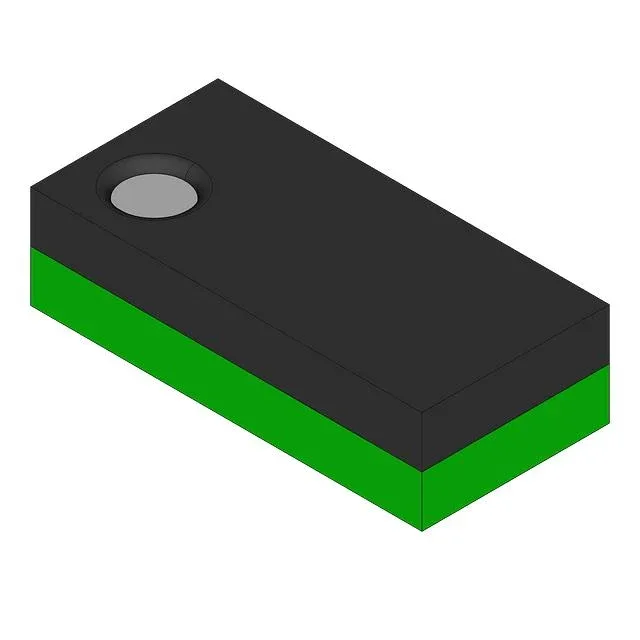
The MAX4292EBL-T: It is designed for low-power, single-supply applications where board space is at a premium and output headroom matters.
Slew rate is 0.2 V/µs and gain-bandwidth product is 500 kHz.
Supply current and input offset — the micropower trade-off
Each amplifier draws 100 µA of supply current, giving a total quiescent draw of 200 µA for the dual package. That is the micropower bargain: low current consumption at the cost of higher input bias current (15 nA typical) and input offset voltage (200 µV typical). The 15 nA bias is manageable for most resistive-sensor circuits if source impedances stay below a few hundred kilohms; higher impedances will produce noticeable DC errors. The 200 µV offset is typical for a general-purpose CMOS op-amp at this power level and will not trouble 8- or 10-bit signal chains without gain.
Package and mounting — the 8-UCSP reality
The 8-UCSP package measures 1.52 mm on each side.
RoHS non-compliance — the sourcing and regulatory flag
This part cannot be shipped into RoHS-regulated markets (EU, UK, California, etc.) without a valid exemption for the end-equipment category. For designs that require RoHS compliance, a lead-free equivalent would need to be identified — there is no pin-compatible RoHS variant listed in the official product family. The non-compliance also means the part may be subject to restricted-material surcharges and longer customs clearance in some jurisdictions.