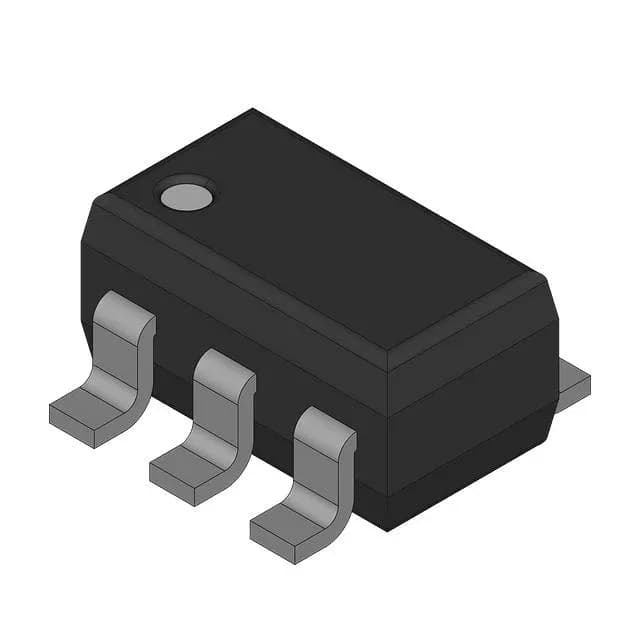
Precision op amp in a small SOT-23-6 — what the specs mean for your BOM
The 0.1 µV input offset is the headline rating — it lets you resolve microvolt-level signals in a single-stage gain block, which is why this part shows up in precision sensor interfaces, thermocouple amplifiers, and medical instrumentation front-ends. The 6.5 MHz gain-bandwidth product and 1.6 V/µs slew rate give it enough small-signal speed for audio processing and control-loop conditioning, though it's not a high-speed video or RF part.
The SOT-23-6 package is a standard footprint with wide second-source compatibility, so if you ever need to dual-source, there are pin-compatible precision op amps from other vendors in the same package. No official replacement part exists because none is needed — the part is still active.
Package and mounting
The 0.1 µV input offset is unusually low for a general-purpose op amp — most parts in this class spec 50 µV to 500 µV. That figure lets you amplify a 10 µV thermocouple signal by 1000 without the offset swamping the measurement. The 1 pA input bias current is equally important: it keeps the voltage error across high-source-impedance sensors (like a pH probe or a photodiode) negligible. The 40 mA output current per channel is enough to drive an ADC input or a small relay directly. The 600 µA supply current is moderate — not micropower, but low enough for battery-powered equipment that isn't on a strict nA budget.