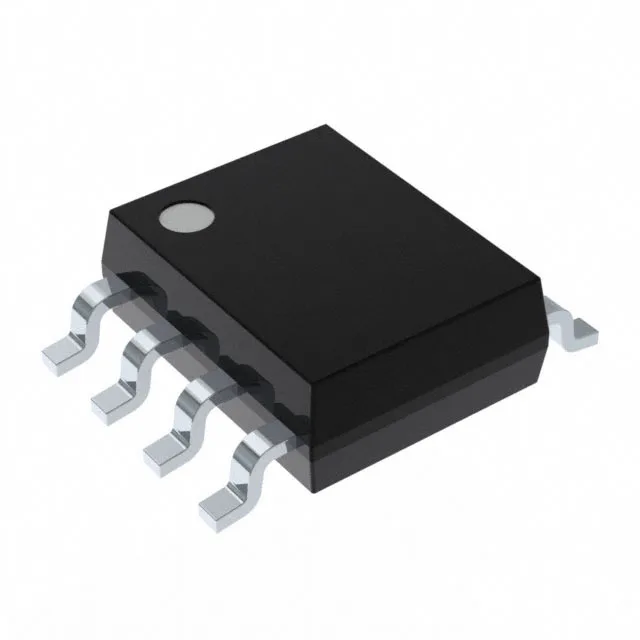
The MAX4128ESA+T: Surface-mount assembly with a 0.154-inch (3.90 mm) width means the pad pitch is 1.27 mm. No exposed pad — the thermal path is through the leads, so keep the copper pour under the body continuous to pull heat from the die.
Signal-chain performance and output drive
25 MHz gain-bandwidth product and a 10 V/µs slew rate — this op amp can swing a 5 Vpp output at roughly 300 kHz before the slew-rate limit kicks in. The rail-to-rail output stage means the swing reaches within millivolts of the supply rails, useful when the ADC reference is the same 2.7 V to 6.5 V rail. Each channel delivers 50 mA output current, enough to drive a 100-ohm load to within 0.5 V of the rails. Input bias current is 50 nA typical — a 10 kΩ source resistor drops 0.5 mV, which adds to the offset error. For a high-impedance front-end, the bias current doubles the offset contribution and may push the total error past the system budget.
Supply voltage and temperature grade
The 725 µA quiescent current per channel (1.45 mA total for both) keeps the power dissipation under 10 mW in most single-supply configurations. No derating curve is listed, but the 8-SOIC's thermal resistance (junction-to-ambient ~120°C/W) limits the internal dissipation to about 500 mW at 85°C ambient before the die exceeds the 150°C absolute maximum.