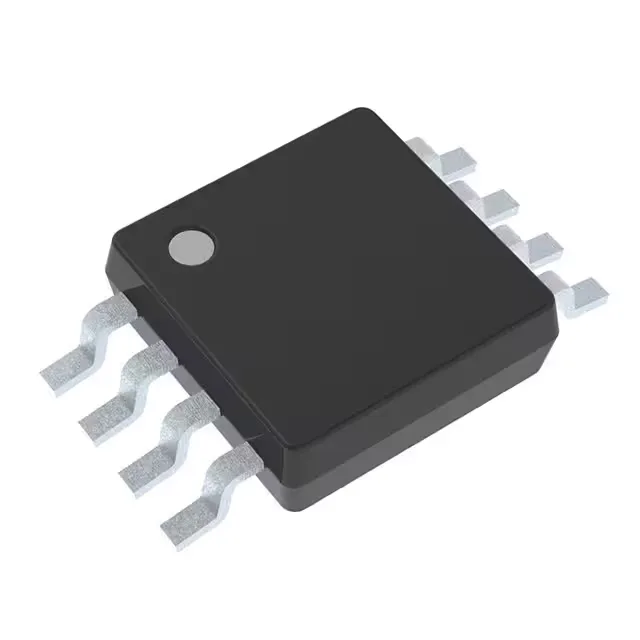
Current sense amplifier for 4.5 V to 76 V rails
Its 250 kHz -3dB bandwidth captures fast load transients and fault events, while drawing only 75 µA of supply current — low enough for always-on monitoring in power-sensitive designs.
250 kHz bandwidth — fast enough for most switching supplies
The 250 kHz -3dB bandwidth means the amplifier can track current waveforms in a switching regulator switching at a few hundred kilohertz, or catch short-circuit events that last a few microseconds. For a 100 kHz buck converter, the current sense output will settle within a switching cycle, giving the controller or ADC a clean signal. If your system needs to monitor sub-microsecond current spikes, this bandwidth may alias them — but for average current monitoring and overcurrent detection on most industrial and automotive rails, it is well matched.
The 4.5 V minimum supply lets the part operate from a standard 5 V bias rail, while the 76 V maximum covers 48 V telecom buses with margin for transients. A single BOM line covers 12 V automotive, 24 V industrial, and 48 V PoE designs without respinning the current-sense block. The input offset voltage of 100 µV translates to a few milliamps of error on a typical 10 mΩ shunt — acceptable for most overcurrent thresholds.