100 Ohm on-resistance — what it means on the bench
The MAX4052CEE+: The 100 Ohm maximum on-resistance sets the insertion loss for the signal path — into a 10 kOhm load the voltage divider drops about 1%, negligible for most analog signals, but into a 600 Ohm audio input the loss is roughly 14% and needs gain compensation downstream.
Supply rails and signal range
Runs on a single supply from 2V to 16V, or dual supplies from ±2.7V to ±8V. The dual-supply mode lets the switch handle bipolar signals up to the rail limits — useful for routing audio or instrumentation signals that swing below ground. The 1 nA max off-leakage and 2 pF channel capacitance keep the signal clean at low frequencies; the -90 dB crosstalk at 100 kHz means a signal on one channel barely bleeds into an adjacent channel, which matters when you are multiplexing a precision sensor array.
Switching speed and package reality
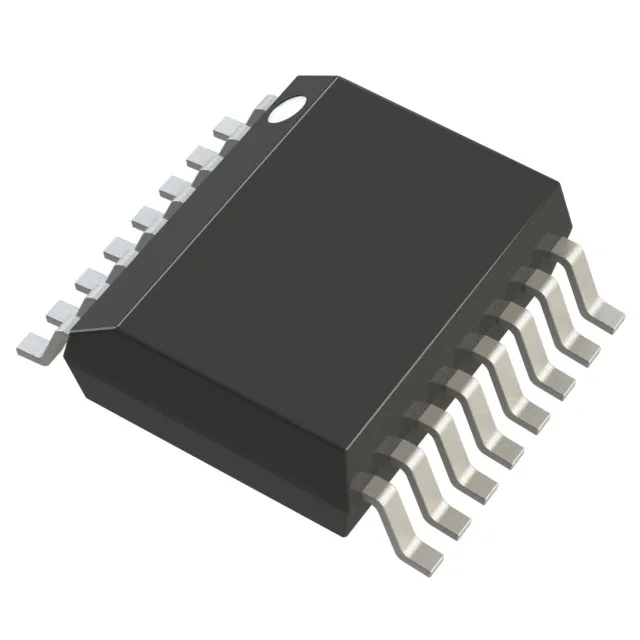
Turn-on time is 175 ns max, turn-off 150 ns max — fast enough for audio crossfading, low-speed data multiplexing up to a few MHz, and relay replacement in control logic. The 16-SSOP package (0.154-inch body width, 0.025-inch pin pitch) is a standard SOIC footprint variant; the 16-QSOP supplier package is the same body but with a finer leadframe. Both are hand-solderable with a fine tip and good flux, but the 0.025-inch pitch means a short between adjacent pins is easy to miss under a loupe.