Dual SP4T multiplexer for precision signal routing
The MAX4052ACSE+ from Maxim Integrated is a dual 4:1 analog multiplexer/demultiplexer, built with two independent SP4T switches in a single 16-SOIC package. It is designed for routing analog or digital signals where low crosstalk and tight channel matching matter — think audio crosspoint switching, data acquisition front-ends, or test equipment signal muxing. Each switch handles rail-to-rail analog signals from a single supply of 2V to 16V, or dual supplies of ±2.7V to ±8V, making it flexible for single-rail or split-rail designs. The 100 Ohm max on-resistance is moderate — fine for voltage-mode signals into a high-impedance load, but watch the voltage drop if you are switching a current loop. Channel-to-channel matching is held to 6 Ohm max, so gain errors across paths stay tight. Off-leakage is a mere 100 pA max, and charge injection is only 2 pC — both good for preserving sample-and-hold accuracy or minimising glitch energy in precision circuits.
Package and mounting
Crosstalk is rated at -90 dB at 100 kHz — that is clean enough for 16-bit audio paths or low-frequency multiplexing without noticeable bleed between channels. If you are switching signals above 1 MHz, expect the isolation to degrade; this part is not built for RF muxing. Switching times are 175 ns on, 150 ns off — fast enough for most audio-rate or slow-data-rate muxing, but not for video-rate or high-speed ADC front-ends. The break-before-make action is inherent in the architecture, so you will not get momentary shorts between channels during transition.
Package, temperature, and compliance
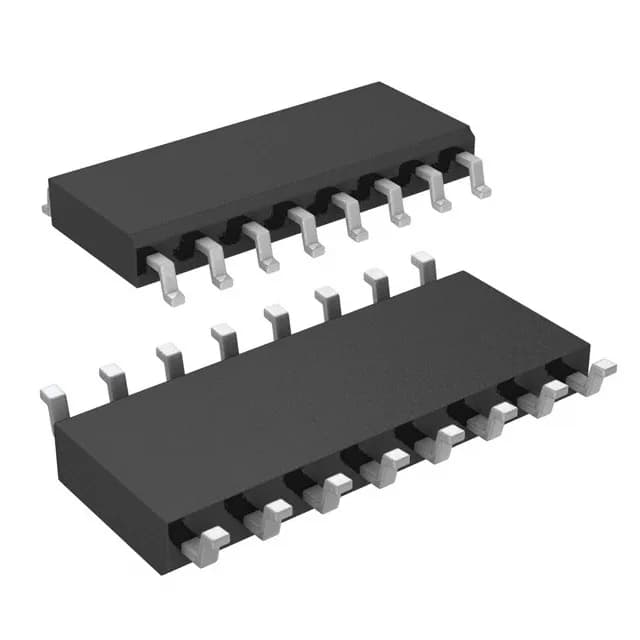
Housed in a 16-SOIC (0.154" body, 3.90 mm width) — a standard footprint that rework techs can swap with a fine-tip iron and some practice. No hot-air station needed. The tube shipping is fine for bench builds; if you need reel for production, check the alternate ordering codes. Temperature range is 0°C to 70°C — commercial grade only. That means indoor, office, or lab environments. Not rated for automotive, industrial, or outdoor use. ROHS3 compliant, so it passes the green-material check for EU markets.
Lifecycle and sourcing — active, no LTB worry
That means it is still a valid choice for new designs and production builds — no last-time-buy scramble needed.