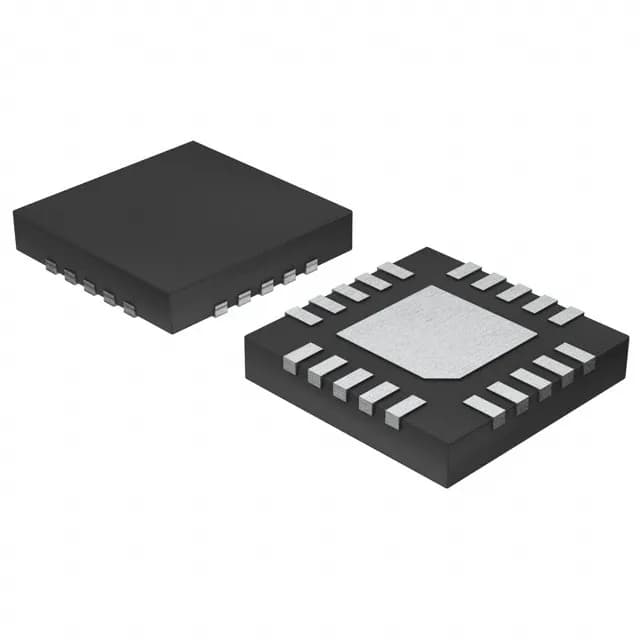
Analog Devices MAX3969ETP+T — DC-DC Power Modules

MAX3969ETP+T Limiting Amplifier, 20-TQFN, Active

MPNMAX3969ETP+T
End of Life

Maxim MAX3969ETP+T, Limiting Amplifier, for Optical Networks, 20-TQFN (4x4) Exposed Pad, Surface Mount, Active.

$6.0Ref. price · indicative, final on quote
Packaging20-WFQFN Exposed Pad
StockContact for availability
MOQ1 pcs
  • 100% new & originalTraceable channels only — no refurbs, no pulls, no remarked parts.
  • Date & lot codes on quoteStated per line before you commit; label photos on request.
  • MSL-compliant ESD packingMoisture-sealed bags with indicator cards; reels photo-verified.
  • PayPal buyer protectionPay by T/T, PayPal or Payoneer — card payments covered end to end.

Specifications

MAX3969ETP+T Technical Specifications
ParameterValue
TypeLimiting Amplifier
Mounting typeSurface Mount
PackageTape & Reel (TR); Cut Tape (CT)
ApplicationsOptical Networks
Case20-WFQFN Exposed Pad

Product details

Limiting amplifier for optical receiver chains

The Maxim MAX3969ETP+T is a limiting amplifier designed for optical network applications, where it sits in the receiver chain to convert a small-signal photodiode output into a logic-level signal with constant amplitude. Its limiting architecture suppresses amplitude noise on the incoming data stream, delivering a clean digital output to the downstream clock-and-data-recovery (CDR) stage. The part is specified for surface-mount assembly in a 20-TQFN (4x4 mm) package with an exposed pad — that pad must be soldered to a thermal land on the PCB to keep junction temperature within limits under continuous operation.

Active lifecycle — no LTB pressure

The MAX3969ETP+T carries an Active product status and is ROHS3 compliant. There is no last-time-buy notice or obsolescence risk on this line today. For a BOM freeze on an optical-network card, this part can be qualified into production without worrying about a near-term EOL.

Frequently asked questions

What is MAX3969ETP+T used for?

It is a limiting amplifier for optical network receiver chains, converting a small photodiode signal into a constant-amplitude logic-level output for downstream CDR circuits.