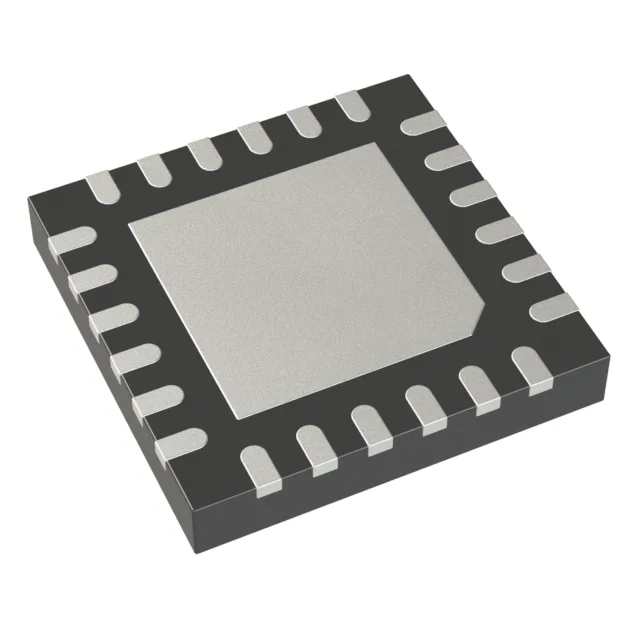
Analog Devices MAX3967AETG+ — Discrete Semiconductors

MAX3967AETG+ Laser Diode Driver, 270Mbps, 24-TQFN

MPNMAX3967AETG+
End of Life

Analog Devices MAX3967AETG+ Laser Diode Driver for Fiber Optic Module, 270Mbps data rate, 2.97V-5.5V supply, 30 mA supply current, adjustable modulation current, 24-TQFN (4x4) package, -40°C to +85°C, ROHS3 compliant.

$6.87Ref. price · indicative, final on quote
Packaging24-WFQFN Exposed Pad
StockContact for availability
Lead timeIn Stock wk
MOQ1 pcs
  • 100% new & originalTraceable channels only — no refurbs, no pulls, no remarked parts.
  • Date & lot codes on quoteStated per line before you commit; label photos on request.
  • MSL-compliant ESD packingMoisture-sealed bags with indicator cards; reels photo-verified.
  • PayPal buyer protectionPay by T/T, PayPal or Payoneer — card payments covered end to end.

Specifications

MAX3967AETG+ Technical Specifications
ParameterValue
TypeLaser Diode Driver for Fiber Optic Module
Mounting typeSurface Mount
Voltage2.97V ~ 5.5V
Current - supply30 mA
Current - modulationAdjustable
Operating temperature-40°C ~ 85°C
PackageTube
Data rate270Mbps
Case24-WFQFN Exposed Pad
Number of channels1

Product details

270Mbps laser diode driver for fiber optic modules

The MAX3967AETG+ is a single-channel laser diode driver from Analog Devices, designed for fiber optic module applications up to 270Mbps. It integrates the modulation current control and bias circuitry needed to drive a laser diode in a SFP or similar transceiver, with the data rate ceiling set by the internal edge-rate and pulse-width distortion limits. Supply voltage spans 2.97V to 5.5V, covering the common 3.3V and 5V rails found in optical transceiver modules. The driver draws 30 mA from the supply, a figure that must be budgeted into the module's total power dissipation alongside the laser bias current.

Industrial temperature grade and package

The modulation current is adjustable, allowing the designer to set the optical output power to match the link budget. The driver's output stage is designed for direct coupling to a laser diode with a series resistor to set the modulation amplitude.