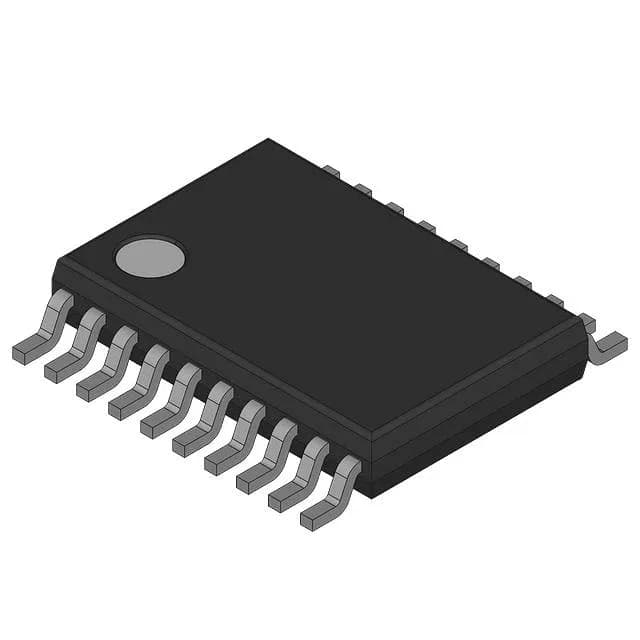
It is the amplifier that boosts the upstream QPSK/QAM signal before it hits the cable plant, and its gain adjustability lets the system compensate for cable loss and temperature variation across the subscriber drop. Packaged in a 20-TSSOP with an exposed pad (20-TSSOP-EP), the part is surface-mount and intended for the dense PCB layouts typical of cable-access equipment. The exposed thermal pad is not optional — it must be soldered to a ground-plane copper island with thermal vias to keep the die temperature within limits under sustained upstream burst transmission.
Package and thermal — the exposed-pad reality
The 20-TSSOP (0.173", 4.40 mm width) with exposed pad is the only package variant for this part. The exposed pad is the primary heat path; without a proper thermal-land pattern and via array to the ground plane, the junction temperature will rise well above the datasheet limits during the upstream burst duty cycle. The pad is also the ground return for the amplifier — layout should connect it directly to the low-impedance ground plane, not through a thermal-relief spoke that adds inductance.
For a CATV infrastructure product with a multi-year service life, that means no forced redesign from a sudden EOL notice.