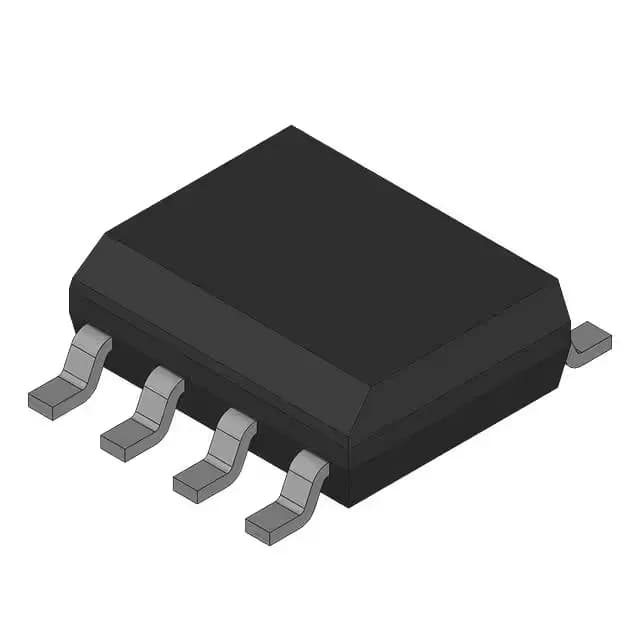
Analog Devices MAX3443EESA+ — Analog & Data Acquisition

MAX3443EESA+ RS-485/RS-422 Transceiver, Half-Duplex, 10 Mbps

MPNMAX3443EESA+
End of Life

Maxim Integrated MAX3443EESA+, RS-422/RS-485 transceiver, half-duplex, 1/1 driver/receiver, 10 Mbps data rate, 4.75V–5.25V supply, -40°C to 85°C, 8-SOIC surface mount, tube.

$10.07Ref. price · indicative, final on quote
Packaging8-SOIC (0.154", 3.90mm Width)
StockContact for availability
MOQ1 pcs
  • 100% new & originalTraceable channels only — no refurbs, no pulls, no remarked parts.
  • Date & lot codes on quoteStated per line before you commit; label photos on request.
  • MSL-compliant ESD packingMoisture-sealed bags with indicator cards; reels photo-verified.
  • PayPal buyer protectionPay by T/T, PayPal or Payoneer — card payments covered end to end.

Specifications

MAX3443EESA+ Technical Specifications
ParameterValue
TypeTransceiver
Mounting typeSurface Mount
Voltage4.75V ~ 5.25V
ProtocolRS422, RS485
Operating temperature-40°C ~ 85°C
DuplexHalf
PackageTube
Data rate10Mbps
Case8-SOIC (0.154\", 3.90mm Width)
Receiver hysteresis25 mV
Number of drivers (Receivers)1/1

Product details

What this transceiver does on the bus

The Maxim Integrated MAX3443EESA+ is a single-channel half-duplex transceiver that handles both RS-422 and RS-485 protocols. It packs one driver and one receiver into an 8-SOIC package, running off a 4.75 V to 5.25 V supply rail. The 10 Mbps data rate is fast enough for most industrial fieldbus segments—PROFIBUS DP, Modbus RTU at high baud rates, or simple point-to-point RS-422 links. The 25 mV of receiver hysteresis cleans up noise on long cable runs, which matters when you are pulling a bus through a plant floor with VFDs and contactors nearby.

Temperature grade and environment

Rated for -40°C to 85°C, this part is comfortable in an unheated cabinet or a rooftop telecom enclosure. Not automotive-grade (no AEC-Q100), but fine for industrial control panels, HVAC controllers, and instrumentation backplanes. The 8-SOIC footprint is a standard layout; if you are replacing a fried part on a legacy board, the package matches the common SOIC-8 land pattern.

Sourcing and lifecycle

ROHS3 compliant, so it passes the current environmental directives without an exemption.

Frequently asked questions

Is MAX3443EESA+ a drop-in replacement for MAX3485?

The MAX3443EESA+ and MAX3485EESA+ are both half-duplex RS-485/RS-422 transceivers in the same 8-SOIC package, but they are not identical. The MAX3443 runs at 10 Mbps with 25 mV hysteresis; the MAX3485 is a 10 Mbps part as well, but the two parts differ in fail-safe biasing and receiver input thresholds. Check the respective datasheets for pin compatibility—they share the standard SOIC-8 pinout for a 1/1 transceiver, but the electrical characteristics are not guaranteed interchangeable without a design review.

Does MAX3443EESA+ support full duplex RS-422?

No. The MAX3443EESA+ is a half-duplex transceiver, meaning it uses a single pair of wires for both transmit and receive, switched by the driver enable. For full-duplex RS-422 (separate transmit and receive pairs), you would need two transceivers or a full-duplex part like the MAX3490.

Does MAX3443EESA+ require termination resistors?

Like any RS-485 or RS-422 transceiver, termination resistors are recommended at the ends of the bus to match the characteristic impedance of the cable and reduce reflections. The 25 mV hysteresis helps with noise immunity, but proper termination is still required for reliable communication at 10 Mbps over longer cable runs.

What is the difference between MAX3443EESA+ and MAX3485EESA+?

Both are 10 Mbps half-duplex RS-485/RS-422 transceivers in 8-SOIC. The MAX3443EESA+ specifies 25 mV of receiver hysteresis; the MAX3485EESA+ typically has 50 mV. The MAX3443 also includes a different fail-safe biasing scheme that guarantees a logic-high output when the inputs are open or shorted. For most applications the parts are functionally similar, but the fail-safe behavior and noise margin differ—review the datasheet before swapping.