What this limiting amplifier does in a fiber-optic link
The Maxim Integrated MAX3272AEGP is a low-power limiting amplifier designed for fiber-optic receiver front-ends. Its job is to take the small-signal output from a photodiode transimpedance amplifier (TIA) and square it up into a clean logic-level signal for the downstream clock-and-data recovery (CDR) or deserializer. The 'limiting' action means the output amplitude stays constant regardless of input signal strength over a wide dynamic range — exactly what you need when the fiber length varies and the received optical power swings.
Package and thermal — the exposed pad matters
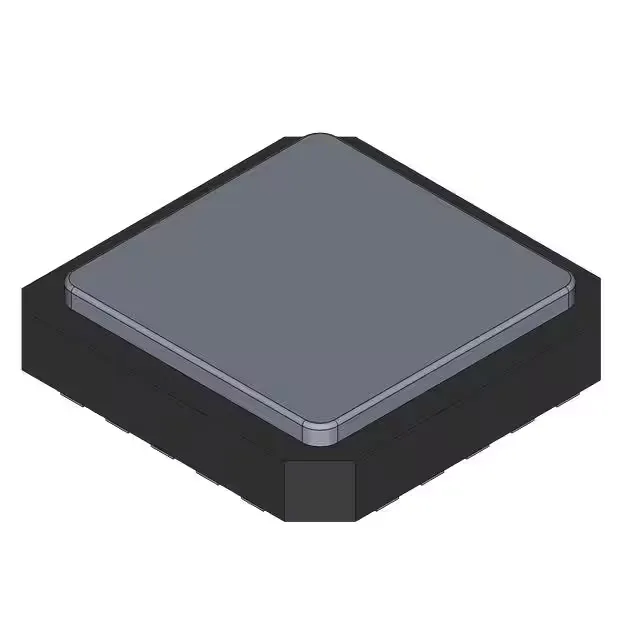
It comes in a 20-VFQFN exposed-pad package (4x4 mm body). If your layout skips the via array under the pad, the junction temperature climbs faster than the datasheet derating suggests — treat it as a mandatory thermal land, not an optional copper pour.
RoHS status — a sourcing constraint
The MAX3272AEGP is listed as RoHS non-compliant. That rules it out for any design that must meet EU RoHS or similar regulations unless you have an explicit exemption. If your BOM requires lead-free assembly, this part is not a fit without a waiver.
Sourcing posture
Because it is Active, there is no last-time-buy clock running, but the RoHS non-compliance means it is increasingly a niche part — expect to verify date codes and supply continuity on each procurement cycle.