Dual-core M4F at 96 MHz — what the clock buys you
The MAX32666GXMBL+ runs two ARM Cortex-M4F cores at 96 MHz, each with a single-precision FPU and DSP extensions. That dual-core architecture lets one core handle real-time control loops or sensor fusion while the other manages the wireless stack or data logging — no context-switching overhead. For a design that needs deterministic response on one thread and throughput on another, this avoids the scheduler tax a single-core part would pay. Program memory is 1 MB of Flash, sized for complex firmware with over-the-air update capabilities; the 560 KB SRAM holds large audio buffers, image frames, or protocol stacks without external memory. The 50 general-purpose I/Os, combined with eMMC/SD/SDIO, USB, I²C, SPI, and UART/USART, cover peripheral-rich applications like wearable gateways, portable medical devices, and industrial IoT edge nodes.
Industrial temperature and wide supply — deployment envelope
Rated -40°C to 105°C ambient, this MCU fits outdoor telecom cabinets, engine-bay controllers, and factory-floor automation where the enclosure sees thermal cycling. The supply range spans 0.72 V to 3.6 V.
Package and assembly constraints
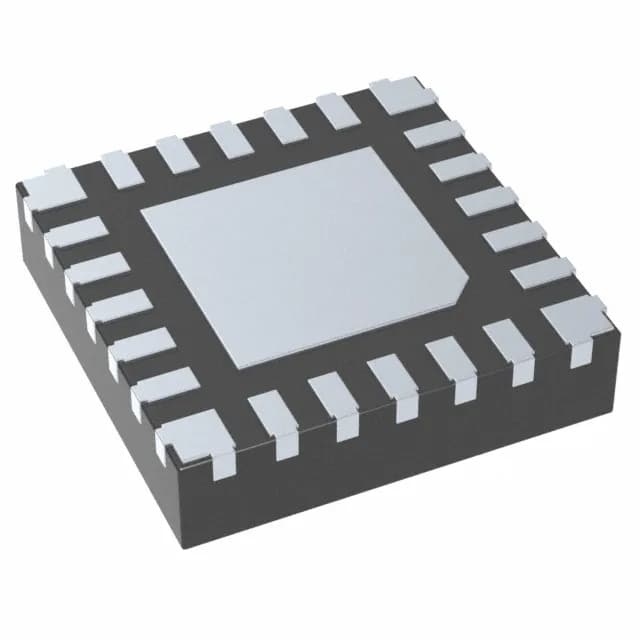
Housed in a 121-ball CTBGA (8x8 mm), this is a fine-pitch BGA. That means the PCB requires controlled via-in-pad or microvia fanout, and assembly needs X-ray inspection for solder-joint verification.
Lifecycle and sourcing posture
ROHS3 compliant. For volume BOM commitments, this part is specified into new designs with confidence; no forced migration horizon.