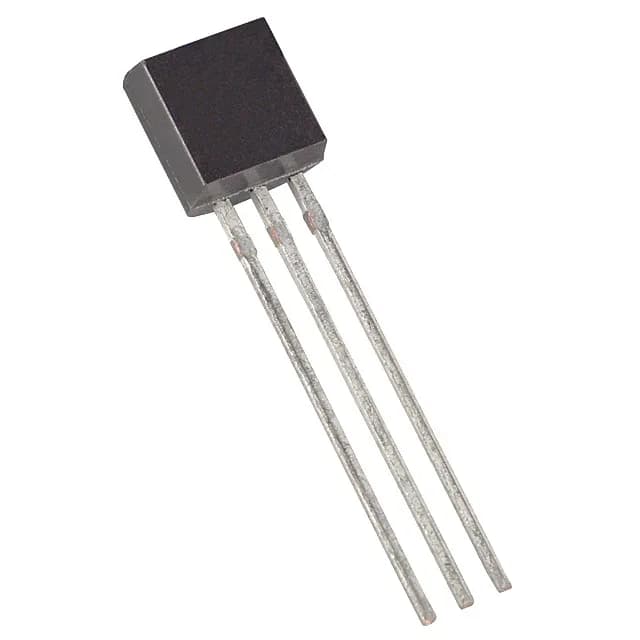
Analog Devices MAX31820MCR+ — Discrete Semiconductors

MAX31820MCR+ Digital Temperature Sensor, TO-92-3, 1-Wire

MPNMAX31820MCR+
End of Life

Maxim Integrated MAX31820MCR+, Digital Local Temperature Sensor, 11 b Resolution, 1-Wire® Output, TO-226-3 / TO-92-3 (TO-226AA) Package, Through Hole, -55°C to 125°C Operating Range, 3V to 3.7V Supply.

$4.76Ref. price · indicative, final on quote
PackagingTO-226-3, TO-92-3 (TO-226AA)
StockContact for availability
MOQ1 pcs
  • 100% new & originalTraceable channels only — no refurbs, no pulls, no remarked parts.
  • Date & lot codes on quoteStated per line before you commit; label photos on request.
  • MSL-compliant ESD packingMoisture-sealed bags with indicator cards; reels photo-verified.
  • PayPal buyer protectionPay by T/T, PayPal or Payoneer — card payments covered end to end.

Specifications

MAX31820MCR+ Technical Specifications
ParameterValue
Output type1-Wire®
Sensor typeDigital, Local
Mounting typeThrough Hole
Voltage3V ~ 3.7V
Operating temperature-55°C ~ 125°C
PackageBulk
Resolution11 b
CaseTO-226-3, TO-92-3 (TO-226AA)
Test condition10°C ~ 45°C (-55°C ~ 125°C)
Accuracy - highest (Lowest)±0.5°C (±2°C)
Sensing temperature - local-55°C ~ 125°C

Product details

What this sensor is and where it fits

The Maxim Integrated MAX31820MCR+ is a digital local temperature sensor that communicates over a 1-Wire bus and reports readings with 11-bit resolution. It is packaged in a through-hole TO-92-3 case, making it a direct mechanical fit for existing sensor sockets or breadboard layouts. The part is rated for the full -55°C to 125°C operating range, which qualifies it for industrial process monitoring, HVAC duct sensing, cold-chain logging, and under-hood automotive temperature measurement where the sensor must survive extreme ambient conditions.

Accuracy across the temperature span

The headline accuracy of ±0.5°C is specified only within the 10°C to 45°C band. Outside that narrow window — from -55°C up to 10°C and from 45°C up to 125°C — the guaranteed accuracy relaxes to ±2°C. For a BOM decision this means the sensor is well suited for comfort-zone monitoring (indoor climate, server-room ambient, medical storage) where the ±0.5°C figure holds. If the application routinely sees the full -55°C to 125°C range, the ±2°C worst-case figure must be budgeted into the system error stack.

Lifecycle and sourcing posture

The MAX31820MCR+ carries an active lifecycle status and is ROHS3 compliant. For a BOM line this means no last-time-buy urgency and no forced redesign to a second source.

Frequently asked questions

Is MAX31820MCR+ a direct replacement for DS18B20?

The MAX31820MCR+ is pin-compatible with the DS18B20 in the same TO-92 package and uses the same 1-Wire protocol, but there are two differences to verify in your firmware. First, the MAX31820MCR+ defaults to 11-bit resolution (0.0625°C per LSB) while the DS18B20 powers up at 12-bit. Second, the supply range is narrower — 3V to 3.7V versus the DS18B20's 3V to 5.5V. If your design runs on a 5V rail, the MAX31820MCR+ will not work. On a 3.3V rail with the resolution difference handled in code, it is a drop-in swap.

What is the accuracy of MAX31820MCR+ at different temperatures?

The sensor guarantees ±0.5°C accuracy in the 10°C to 45°C band. Outside that range, across the full -55°C to 125°C operating window, the accuracy is ±2°C. There is no intermediate specification for, say, -20°C to 85°C — the datasheet gives only these two zones.

Does MAX31820MCR+ work with 3.3V systems?

Yes, the 3V to 3.7V supply range includes 3.3V. Provided the 3.3V rail is regulated to within ±5% (staying above 3.0V and below 3.7V), the sensor operates correctly. A standard 3.3V LDO with ±2% tolerance is sufficient.